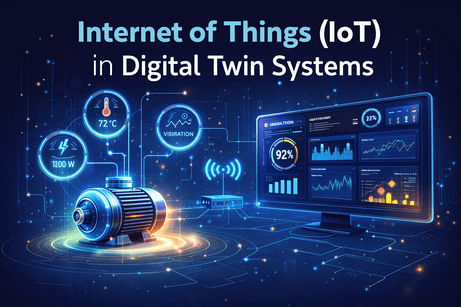
1. Introduction: IoT as the Foundation of Digital Twins
The Internet of Things (IoT) is the technological backbone that makes digital twins possible. Without IoT, a digital twin would simply be a static simulation or a theoretical model. What transforms it into a living, evolving system is the continuous stream of real-world data captured from physical objects.
IoT refers to a network of interconnected devices—sensors, machines, embedded systems—that collect and exchange data over the internet. In the context of digital twins, IoT devices act as the eyes and ears of the system. They observe physical conditions in real time and transmit this information to the digital environment, allowing the twin to mirror reality with high accuracy.
This real-time connection is what enables digital twins to move beyond traditional monitoring and into predictive, adaptive, and intelligent systems. Instead of reacting to problems after they occur, organizations can anticipate issues, optimize performance, and simulate outcomes before making decisions.
At the core of IoT are sensors and embedded devices that continuously measure physical variables. These variables depend on the type of system being monitored but often include:
- Temperature
- Pressure
- Humidity
- Vibration
- Speed (RPM)
- Energy consumption
- Location (GPS)
Each sensor captures a specific aspect of the physical system’s behavior. For example, in an industrial motor, temperature sensors detect overheating, vibration sensors detect imbalance or wear, and RPM sensors monitor performance consistency.
These measurements are not taken once or twice—they are collected continuously, often every second or millisecond. This creates a stream of data known as time-series data, which is essential for understanding trends, detecting anomalies, and building predictive models.
The IoT device typically includes a microcontroller that processes the sensor signals and converts them into digital data. This data is then packaged and sent to a server or cloud platform for further analysis.
3. Data Transmission: From Physical World to Digital Twin
Once data is captured, it must be transmitted efficiently and reliably. This is achieved through various communication technologies:
- Wi-Fi
- Bluetooth Low Energy (BLE)
- Cellular networks (4G/5G)
- Industrial protocols (MQTT, Modbus, OPC-UA)
Among these, MQTT (Message Queuing Telemetry Transport) is widely used in IoT systems because it is lightweight and optimized for real-time communication. It allows devices to publish data to a broker, which then distributes it to subscribers such as the digital twin system.
The transmission layer ensures that data flows continuously from the physical asset to the digital environment. Any delay or interruption in this flow can reduce the accuracy of the digital twin, which is why reliability and low latency are critical.
4. Integration with Digital Twin Platforms
Once the data reaches the digital system, it is integrated into platforms such as Microsoft Azure IoT Hub or Amazon Web Services IoT Core. These platforms provide tools to:
- Store large volumes of data
- Process data streams in real time
- Apply analytics and machine learning
- Visualize system behavior
In a Django-based digital twin dashboard, this data can be received through API endpoints, stored in a database, and used to update the system’s state dynamically. The digital twin model is continuously refreshed with the latest values, ensuring that it reflects the current condition of the physical asset.
5. Real-Time Synchronization and Feedback Loop
One of the most powerful aspects of IoT in digital twins is the creation of a feedback loop. The process works as follows:
- Sensors collect real-time data from the physical system
- Data is transmitted to the digital twin
- The digital twin analyzes and interprets the data
- Insights are generated (e.g., anomaly detected)
- Actions are recommended or automatically triggered
This loop allows systems to become self-aware and adaptive. For example, if a machine begins to overheat, the digital twin can detect the anomaly and recommend reducing load or scheduling maintenance. In advanced systems, it can even send commands back to the machine to adjust its behavior automatically.
6. Role of IoT in Predictive Maintenance
IoT data enables one of the most valuable applications of digital twins: predictive maintenance. Instead of relying on fixed maintenance schedules, organizations can monitor the actual condition of equipment.
By analyzing patterns in sensor data, the system can detect early signs of failure. For example:
- Increasing vibration may indicate bearing wear
- Rising temperature may signal cooling issues
- Irregular RPM may suggest mechanical imbalance
These patterns are often subtle and cannot be detected through manual observation. However, with continuous IoT data and analytics, the digital twin can identify these signals early and prevent costly breakdowns.
This approach reduces downtime, extends equipment lifespan, and significantly lowers maintenance costs.
7. Edge Computing and IoT Efficiency
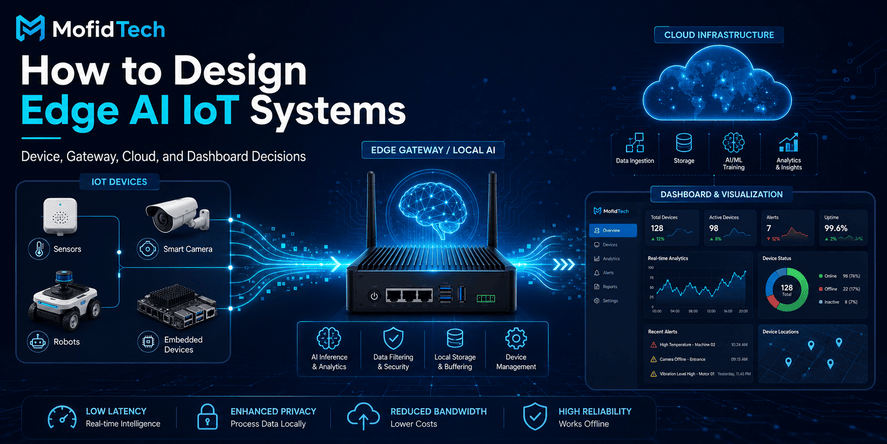
In some cases, sending all data to the cloud is not efficient due to latency or bandwidth limitations. This is where edge computing comes into play.
Edge devices process data locally before sending it to the central system. This allows:
- Faster decision-making
- Reduced network load
- Improved system reliability
For example, an edge device can filter noise, detect anomalies, or aggregate data before transmitting it. This ensures that only meaningful information reaches the digital twin, improving performance and scalability.
8. Challenges of IoT in Digital Twin Systems
While IoT is essential, it also introduces challenges:
Data Overload
Continuous data streams can generate massive volumes of data, requiring efficient storage and processing.
Security Risks
IoT devices are often vulnerable to cyberattacks. Securing communication channels and devices is critical.
Data Quality
Inaccurate or noisy sensor data can lead to incorrect insights in the digital twin.
Integration Complexity
Connecting different devices, protocols, and platforms can be complex and requires careful system design.
Despite these challenges, advancements in cloud computing, AI, and edge technologies continue to improve IoT reliability and scalability.
9. IoT in a Django Digital Twin Dashboard
In a Django-based implementation, IoT devices interact with the system through APIs. A typical flow looks like this:
- IoT device sends data via HTTP or MQTT
- Django API receives and stores telemetry data
- Business logic evaluates system health
- Alerts are generated if thresholds are exceeded
- Dashboard updates in real time
This architecture allows developers to build powerful monitoring systems using familiar web technologies. By combining Django with IoT data streams, you can create a full digital twin environment capable of real-time visualization and intelligent decision-making.
10. Conclusion
The Internet of Things is the lifeblood of digital twin systems. It transforms static models into dynamic, real-time representations of physical systems. By continuously capturing and transmitting data, IoT enables digital twins to monitor, analyze, and optimize operations with unprecedented precision.
As industries continue to embrace smart technologies, the integration of IoT and digital twins will play a central role in shaping the future of automation, efficiency, and innovation.
💬 Comments
No comments yet. Be the first to comment!
Login to comment.