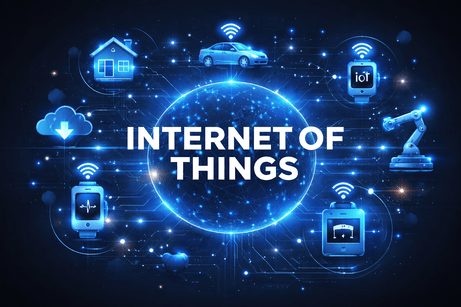
The Internet of Things (IoT) represents one of the most transformative technological paradigms of the 21st century. It refers to a vast network of interconnected physical devices—ranging from everyday household objects to sophisticated industrial machines—that are embedded with sensors, software, and communication capabilities. These devices collect, exchange, and act on data in real time, often without human intervention. At its core, IoT bridges the gap between the physical and digital worlds, enabling systems to sense their environment, analyze information, and make intelligent decisions.
1. The Fundamental Concept of IoT
IoT is built on the idea that objects can be “smart” and connected. Traditionally, devices operated in isolation. However, with IoT, a simple object like a thermostat becomes part of an intelligent ecosystem. It can monitor temperature, learn user preferences, and communicate with other devices such as smartphones or HVAC systems.
The concept extends beyond convenience—it enables automation, optimization, and predictive capabilities. For example, in agriculture, IoT sensors monitor soil moisture and automatically trigger irrigation systems, reducing water waste and improving crop yield.
2. Core Components of IoT Systems
An IoT system typically consists of four essential layers:
a. Devices and Sensors
These are the physical components that collect data from the environment. Sensors can measure temperature, humidity, pressure, motion, light, and many other variables. Actuators, on the other hand, perform actions such as turning a motor on or off.
b. Connectivity
Devices need to communicate with each other and with centralized systems. This communication is enabled through various technologies such as Wi-Fi, Bluetooth, Zigbee, LoRaWAN, and cellular networks (4G/5G). The choice depends on range, power consumption, and data requirements.
c. Data Processing
Once data is collected, it must be processed. This can happen locally (edge computing) or in remote servers (cloud computing). Processing involves filtering, analyzing, and transforming raw data into meaningful insights.
d. User Interface
Finally, users interact with IoT systems through dashboards, mobile apps, or web interfaces. These interfaces allow users to monitor data, receive alerts, and control devices.
3. IoT Architecture: From Edge to Cloud
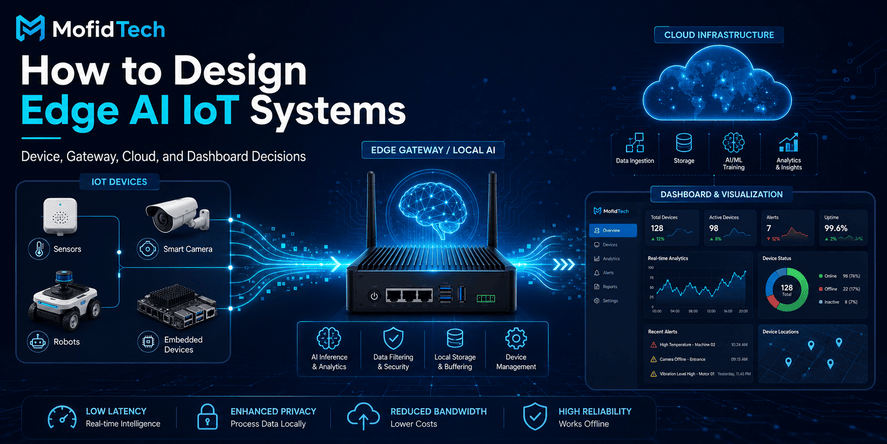
Modern IoT architectures are layered and distributed. At the lowest level is the edge layer, where devices and sensors operate. Above it lies the gateway layer, which aggregates data and ensures secure communication. The cloud layer provides large-scale storage and advanced analytics, while the application layer delivers services to end users.
A key trend is the integration of edge computing, where data is processed closer to the source. This reduces latency and bandwidth usage, which is critical for real-time applications such as autonomous vehicles or industrial automation.
4. Communication Protocols in IoT
IoT devices rely on lightweight communication protocols optimized for efficiency:
- MQTT (Message Queuing Telemetry Transport): A publish-subscribe protocol designed for low-bandwidth environments.
- CoAP (Constrained Application Protocol): Used for constrained devices with limited resources.
- HTTP/HTTPS: Common in web-based IoT applications.
- AMQP and DDS: Used in enterprise and industrial environments.
These protocols ensure reliable and efficient data exchange across diverse devices and networks.
5. IoT Data Lifecycle
The IoT data lifecycle involves several stages:
- Data Generation: Sensors collect raw data.
- Data Transmission: Data is sent to processing systems.
- Data Storage: Data is stored in databases or cloud platforms.
- Data Analysis: Advanced analytics and machine learning extract insights.
- Action: Systems respond automatically or notify users.
This continuous cycle enables real-time decision-making and system optimization.
6. Applications of IoT Across Industries
a. Smart Homes
IoT enables automation of lighting, heating, security, and appliances. Devices like smart locks, cameras, and voice assistants create a connected living environment.
b. Healthcare (IoMT)
In healthcare, IoT (often called the Internet of Medical Things) allows remote patient monitoring, wearable health devices, and smart medical equipment. This improves patient outcomes and reduces hospital visits.
c. Industrial IoT (IIoT)
Factories use IoT to monitor machinery, predict failures, and optimize production processes. This leads to increased efficiency and reduced downtime.
d. Smart Cities
IoT is used in traffic management, waste management, energy distribution, and environmental monitoring. Cities become more efficient, sustainable, and livable.
e. Agriculture
Precision agriculture uses IoT sensors to monitor soil conditions, weather, and crop health, enabling data-driven farming.
f. Transportation and Logistics
IoT tracks vehicles, optimizes routes, monitors fuel consumption, and ensures the safety of goods in transit.
7. Security Challenges in IoT
Despite its benefits, IoT introduces significant security concerns. Devices are often resource-constrained, making it difficult to implement strong security measures. Common risks include:
- Unauthorized access to devices
- Data breaches and privacy violations
- Botnet attacks (e.g., large-scale DDoS attacks using IoT devices)
To address these challenges, best practices include encryption, secure authentication, regular firmware updates, and network segmentation.
8. Scalability and Interoperability
One of the biggest challenges in IoT is managing billions of devices. Systems must be scalable to handle massive data volumes and device connections. Interoperability is also crucial—devices from different manufacturers must communicate seamlessly.
Standards and frameworks are being developed to ensure compatibility and efficient integration across ecosystems.
9. Role of AI and Big Data in IoT
IoT generates enormous amounts of data. Integrating it with Artificial Intelligence and Big Data Analytics enables advanced capabilities:
- Predictive maintenance
- Anomaly detection
- Personalized services
- Autonomous decision-making
For example, AI models can analyze sensor data to predict equipment failures before they occur, saving costs and improving reliability.
10. IoT and Cloud Computing
Cloud platforms provide the infrastructure needed to store and process IoT data at scale. Services such as device management, data analytics, and machine learning are often hosted in the cloud.
However, reliance on the cloud introduces latency and bandwidth challenges, which is why hybrid architectures combining cloud and edge computing are becoming more common.
11. Future Trends in IoT
The future of IoT is shaped by several emerging trends:
- 5G Networks: Faster and more reliable connectivity for real-time applications.
- Edge AI: Running AI models directly on devices.
- Digital Twins: Virtual replicas of physical systems for simulation and optimization.
- Blockchain Integration: Enhancing security and trust in IoT networks.
- Sustainability: Energy-efficient devices and green IoT solutions.
These advancements will further expand the capabilities and impact of IoT.
12. Advantages and Limitations
Advantages
- Automation and efficiency
- Real-time monitoring and control
- Data-driven decision-making
- Cost reduction in operations
Limitations
- Security and privacy concerns
- High initial deployment cost
- Complexity in system integration
- Dependence on connectivity
13. Energy Efficiency and Power Management in IoT
One of the most critical challenges in IoT systems is energy consumption, especially for battery-powered devices deployed in remote or inaccessible locations. Efficient power management techniques are essential to extend device lifespan and reduce maintenance costs. Technologies such as low-power wide-area networks (LPWAN), sleep modes, and energy harvesting (e.g., solar or kinetic energy) are widely used to address this issue. Engineers must carefully balance performance and power usage, optimizing communication frequency and processing intensity. For example, a sensor that transmits data every second consumes significantly more energy than one that transmits only when a threshold is exceeded. Designing energy-aware IoT systems is therefore a fundamental aspect of scalable deployments.
14. Edge Computing and Real-Time Processing
Edge computing has become a cornerstone of modern IoT architectures. Instead of sending all data to centralized servers, edge devices process data locally or near the source. This approach reduces latency, minimizes bandwidth usage, and enhances responsiveness. In applications like autonomous vehicles, industrial robotics, or healthcare monitoring, even milliseconds matter. Edge computing enables real-time decision-making, such as stopping a machine when a fault is detected or alerting a doctor during a critical health event. Moreover, it improves privacy by keeping sensitive data closer to its origin rather than transmitting it over networks.
15. IoT Device Management and Lifecycle
Managing IoT devices at scale is a complex task that involves provisioning, monitoring, updating, and decommissioning devices throughout their lifecycle. Device management platforms allow administrators to remotely configure devices, push firmware updates, and monitor performance metrics. Over-the-air (OTA) updates are particularly important, as they enable security patches and feature enhancements without physical access to devices. Lifecycle management also includes handling device failures, replacements, and end-of-life disposal. Without proper management, large IoT deployments can quickly become unmanageable and vulnerable.
16. Data Privacy and Ethical Considerations
As IoT devices continuously collect data from users and environments, concerns about privacy and ethics have become increasingly important. Personal data such as location, health metrics, and behavioral patterns can be highly sensitive. Organizations must ensure compliance with data protection regulations and implement transparent data policies. Ethical considerations include obtaining user consent, minimizing data collection, and ensuring that data is not misused. For example, a smart home system should not collect more information than necessary or share it without explicit permission. Building trust with users is essential for the long-term success of IoT technologies.
17. Interoperability and Standardization Efforts
The diversity of IoT devices and platforms creates significant interoperability challenges. Different manufacturers often use proprietary protocols and data formats, making integration difficult. To address this, international organizations and industry groups are working on standardization efforts. Protocols and frameworks aim to ensure that devices can communicate seamlessly regardless of their origin. Interoperability is crucial for building unified ecosystems, such as smart cities where traffic systems, energy grids, and public services must work together efficiently. Without standards, IoT systems risk fragmentation and limited scalability.
18. IoT in Environmental Monitoring and Sustainability
IoT plays a vital role in addressing environmental challenges and promoting sustainability. Sensors can monitor air quality, water levels, temperature, and pollution in real time. This data helps governments and organizations make informed decisions to protect natural resources. For example, IoT systems can detect forest fires early, monitor ocean pollution, or optimize energy consumption in buildings. Smart grids use IoT to balance energy supply and demand, integrating renewable energy sources such as solar and wind. By enabling precise monitoring and control, IoT contributes significantly to environmental conservation.
19. Economic Impact and Business Models of IoT
IoT is reshaping business models across industries by enabling new revenue streams and operational efficiencies. Companies can transition from product-based models to service-based models, such as offering “products as a service.” For example, instead of selling machinery, a company might charge customers based on usage or performance. IoT also enables predictive maintenance, reducing downtime and operational costs. Additionally, data collected from IoT devices can be monetized through analytics and insights. However, businesses must carefully manage data ownership, privacy, and security to maintain customer trust.
20. Challenges in IoT Deployment
Despite its potential, deploying IoT systems is not without challenges. Technical issues such as network reliability, data integration, and device compatibility can complicate implementation. Environmental factors, such as extreme temperatures or physical obstructions, can affect device performance. Additionally, the cost of infrastructure, including sensors, connectivity, and cloud services, can be significant. Organizations must also address organizational challenges, such as skill gaps and resistance to change. Successful IoT deployment requires careful planning, testing, and continuous optimization.
21. IoT and Cybersecurity Strategies
As IoT ecosystems grow, robust cybersecurity strategies become essential. Unlike traditional IT systems, IoT devices are often distributed and physically accessible, increasing their vulnerability. Security must be integrated at every layer, from hardware to software and network communication. Techniques such as secure boot, encryption, identity management, and anomaly detection are commonly used. Organizations should adopt a “security by design” approach, ensuring that security is considered from the initial development stages rather than added later. Continuous monitoring and threat detection are also critical to protect against evolving cyber threats.
22. The Future Vision of IoT Ecosystems
Looking ahead, IoT is expected to evolve into highly intelligent and autonomous ecosystems. Devices will not only communicate but also collaborate and make decisions collectively. Integration with emerging technologies such as artificial intelligence, blockchain, and quantum computing will unlock new possibilities. For instance, decentralized IoT networks powered by blockchain could enhance trust and security, while AI-driven systems could enable fully autonomous operations. The vision of a hyper-connected world, where physical and digital systems seamlessly interact, is becoming increasingly realistic. IoT will serve as the backbone of this transformation, shaping industries, cities, and daily life in profound ways.
Conclusion:
In this comprehensive guide, we explored the Internet of Things (IoT) from its fundamental concept to its most advanced applications and future perspectives. Beginning with the core definition and architecture (parts 1–3), we examined how IoT systems are built using sensors, connectivity, data processing, and user interfaces. We then covered essential communication protocols and the full data lifecycle (parts 4–5), followed by a deep dive into real-world applications across industries such as smart homes, healthcare, industry, agriculture, and smart cities (part 6).
The article also addressed critical challenges, including security risks, scalability, and interoperability (parts 7–8), while highlighting the powerful role of artificial intelligence, big data, and cloud computing in enhancing IoT capabilities (parts 9–10). Looking toward the future (part 11), we explored trends like 5G, edge AI, and digital twins, along with the advantages and limitations of IoT systems (part 12).
In the extended sections (parts 13–22), we further examined key aspects such as energy efficiency, edge computing, device lifecycle management, data privacy, and standardization. We also discussed IoT’s role in sustainability, its economic impact, deployment challenges, cybersecurity strategies, and the vision of fully autonomous and intelligent ecosystems.
Overall, this article demonstrates that IoT is not just a technology but a transformative force reshaping how we live, work, and interact with the world. As innovation continues to evolve, IoT will remain at the center of the digital revolution, driving smarter, more connected, and more efficient systems across all domains.
💬 Comments
No comments yet. Be the first to comment!
Login to comment.