Introduction
Python is a high-level, interpreted, dynamically typed, and multi-paradigm programming language created by Guido van Rossum in the late 1980s and officially released in 1991. Its design philosophy emphasizes code readability, expressed through a clean and expressive syntax that significantly reduces the cognitive load on developers. Python enforces indentation-based block structuring, which contributes to consistent formatting and improved maintainability across codebases.
Under the hood, Python is powered primarily by CPython, the reference implementation written in C, although alternative implementations such as PyPy, Jython, IronPython, and MicroPython extend Python’s reach to just-in-time compilation, JVM interoperability, .NET environments, and embedded devices. The existence of multiple runtimes makes Python suitable for a wide spectrum of computational environments, from servers and scientific workstations to microcontrollers with limited memory.
Key Language Characteristics
1. Dynamic Typing and Duck Typing
Python uses dynamic typing, where variable types are checked at runtime rather than compile time. The language’s duck-typing model enables polymorphism by behavior rather than inheritance, enabling highly flexible code but requiring careful testing for production systems.
2. Automatic Memory Management
Python relies on reference counting combined with a cyclic garbage collector to manage memory allocation and reclamation. Developers rarely need to manipulate memory manually, which simplifies development but introduces overhead compared to low-level languages.
3. Rich Standard Library
The “batteries-included” philosophy equips Python with modules for:
- networking (
socket,asyncio) - file I/O (
pathlib,io) - multiprocessing & threading (
multiprocessing,threading) - data serialization (
json,pickle) - unit testing (
unittest,pytest)
This makes Python suitable for rapid development of complex systems without relying heavily on external packages—while still allowing deep integration with third-party libraries when needed.
4. Multi-Paradigm Support
Python supports:
- Procedural programming
- Object-oriented programming
- Functional constructs like higher-order functions, list comprehensions, immutability, and partial application (
functools) - Asynchronous programming with
async/await(event loops similar to JavaScript)
This flexibility allows developers to adapt architecture patterns to the problem domain.
Core Internals
Interpreter Architecture
CPython transforms Python source code into bytecode, executed by a virtual machine. The absence of a static compilation stage enhances productivity but comes with performance limitations for compute-heavy tasks.
The Global Interpreter Lock (GIL)
In CPython, the GIL ensures that only one thread executes Python bytecode at a time. This simplifies memory management but constrains parallel CPU-bound execution. Developers bypass GIL limitations by using:
- multiprocessing (process-level parallelism)
- NumPy or PyTorch (C-optimized native code)
- Cython or Rust extensions for performance-critical sections
Extensibility
Python integrates easily with:
- C/C++ via CPython API
- Rust via
pyo3orrust-cpython - Fortran through scientific libraries
This makes Python a powerful orchestration layer on top of high-performance native modules.
Technical Applications of Python
1. Web Development and Backend Engineering
Python’s web frameworks encapsulate modern server-side patterns:
- Django – full-stack, ORM, migrations, authentication, middleware, signals
- FastAPI – asynchronous architecture, automatic OpenAPI documentation, Pydantic validation
- Flask – micro-framework for modular or microservice architectures
Python excels in API development, high-level business logic, rapid prototyping, and microservices.
2. Scientific Computing & Numerical Methods
Python is the de facto environment for computational science due to its extensive scientific stack:
- NumPy: ND-arrays, vectorized operations, BLAS/LAPACK bindings
- SciPy: numerical integration, optimization, signal processing
- Matplotlib, Seaborn, Plotly: data visualization
- SymPy: symbolic mathematics
This ecosystem replaces legacy environments like MATLAB for many institutions and research teams.
3. Machine Learning, Deep Learning & AI Engineering
Python’s dominance in AI stems from frameworks tightly integrated with optimized C/CUDA backends:
- TensorFlow & Keras
- PyTorch (dynamic computation graphs)
- Scikit-learn (traditional ML algorithms)
- XGBoost / LightGBM / CatBoost (gradient boosting engines)
Applications include:
- computer vision
- natural language processing
- large-scale recommendation systems
- robotics & control
- reinforcement learning
- signal and image processing
Python’s role extends from model training to deployment via ONNX, TorchScript, FastAPI, MLflow, and cloud services.
4. Automation, Scripting & DevOps Tooling
Python is foundational in DevOps:
- CI/CD automation
- infrastructure scripting
- cloud SDK integrations (AWS Boto3, GCP SDK, Azure SDK)
- Docker orchestration
- log parsing & monitoring
Its simplicity and readability make Python ideal for operational engineering and rapid tooling.
5. Cybersecurity & Offensive Security
Python is heavily used for:
- exploit development
- penetration-testing tools
- packet crafting (
scapy) - encryption & hashing (
cryptography,hashlib) - web vulnerability scanning
It enables rapid prototyping of security tools thanks to its high-level syntax combined with low-level networking access.
6. Distributed Systems & Cloud Computing
Python integrates with distributed data and compute frameworks:
- Apache Spark (PySpark)
- Ray – distributed Python execution
- Dask – parallel computing for dataframes & arrays
- Celery – distributed task queues
This allows Python to scale across multi-node clusters for big-data workloads and distributed AI pipelines.
7. Embedded Systems & IoT
Python’s lightweight implementations make it suitable for embedded systems:
- MicroPython / CircuitPython on microcontrollers
- Python on Raspberry Pi for robotics, automation, and sensor systems
Python acts as a high-level control layer for hardware interfacing, rapid prototyping, and IoT edge computing.
Python in Modern Software Architecture
Microservices
Python integrates well with containerized architectures (Docker, Kubernetes) and supports resilient, scalable backends through FastAPI, Flask, and message queues like RabbitMQ/Redis.
API-first Design
Python frameworks automatically generate API schemas, enabling clean communication between services.
Cloud-native Development
Python’s ecosystem supports:
- serverless functions (AWS Lambda, Azure Functions)
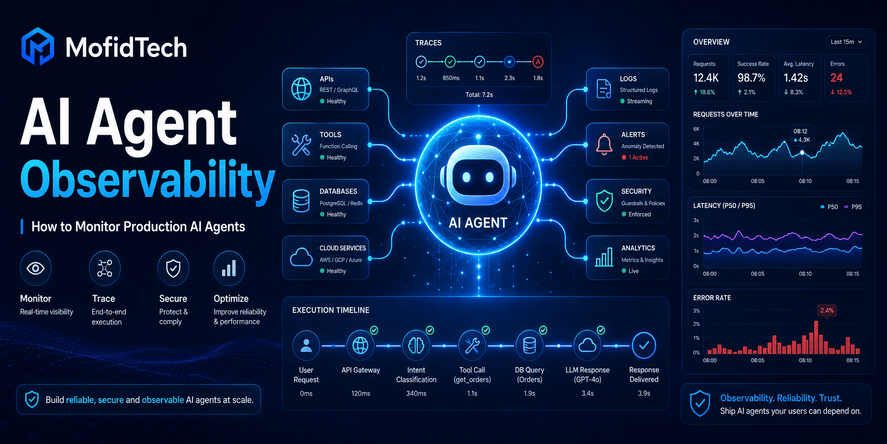
- observability (Prometheus exporters, OpenTelemetry)
- IaC (Terraform + Python scripts, Pulumi in Python)
Conclusion: Python as a Universal Engineering Language
Python is no longer just a programming language; it has become a core engineering toolbox across multiple domains—from web development to scientific computing, AI, DevOps, embedded systems, and distributed architectures. Its ability to serve as both a high-level orchestration layer and a gateway to high-performance native extensions makes it uniquely positioned for modern computing challenges.
Its active ecosystem, simplicity, cross-platform nature, and deep integration with high-performance libraries have solidified Python as one of the most powerful and versatile languages in the global software landscape.

💬 Comments
No comments yet. Be the first to comment!
Login to comment.