Introduction
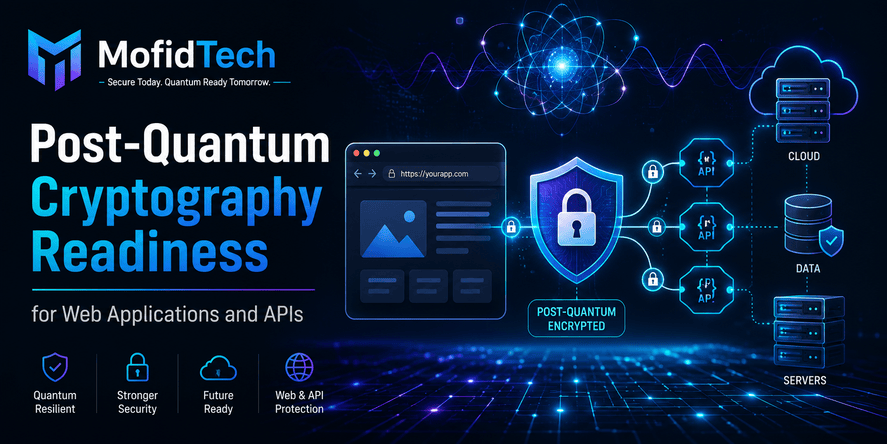
Post-quantum cryptography is no longer only a research topic for cryptographers. It is becoming a practical planning issue for web applications, APIs, cloud systems, identity platforms, certificate infrastructure, and long-term data protection.
For developers, the most important question is not whether they should replace every security mechanism immediately. The real question is this: how can a development team prepare its applications, APIs, infrastructure, and vendors for a future where today’s public-key cryptography may no longer be enough?
NIST finalized its first three post-quantum cryptography standards in August 2024, including ML-KEM for key encapsulation and ML-DSA and SLH-DSA for digital signatures. NIST describes these standards as part of the transition toward cryptographic systems that can resist future quantum attacks.
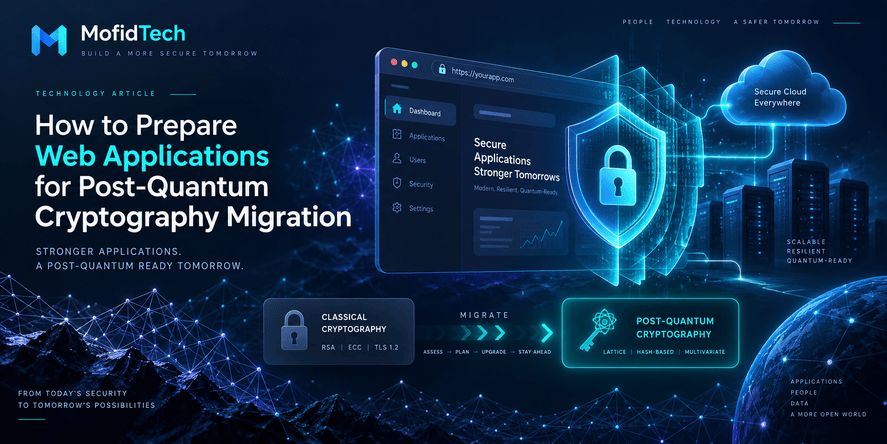
This does not mean every web application is broken today. It does mean teams should stop treating cryptography as invisible background infrastructure. Web applications depend on encryption, signatures, certificates, identity tokens, secure channels, cloud services, backups, logs, and third-party providers. Many of these systems rely on public-key cryptography that may need to evolve.
The best preparation is not panic. The best preparation is crypto-agility: the ability to identify where cryptography is used, understand which data needs long-term protection, evaluate vendors, test safer options, and migrate when standards, libraries, platforms, and infrastructure are ready.
Table of Contents
- What Is Post-Quantum Cryptography?
- Why Developers Should Care About PQC
- What “Harvest Now, Decrypt Later” Means
- How Web Applications Use Cryptography
- How APIs Are Affected by Post-Quantum Risk
- What Crypto-Agility Means
- Post-Quantum Readiness Checklist
- Crypto Inventory for Web Applications
- Practical Migration Roadmap
- Vendor and Cloud Provider Questions
- Security Considerations
- Performance Considerations
- Common Mistakes to Avoid
- Troubleshooting PQC Readiness Problems
- Comparison Tables
- FAQ
- Conclusion
What Is Post-Quantum Cryptography?
Post-quantum cryptography is a family of cryptographic algorithms designed to remain secure against attackers who may one day have powerful quantum computers.
A normal web application today may use HTTPS, TLS certificates, digital signatures, identity tokens, secure API communication, encrypted database connections, and cloud key management. Many of these systems rely on mathematical problems that are considered hard for classical computers but may be vulnerable to sufficiently powerful quantum computers.
Post-quantum cryptography does not mean using quantum computers to protect data. It means using new cryptographic algorithms that can run on normal computers but are designed to resist quantum attacks.
A simple definition
Post-quantum cryptography is cryptography designed for the future quantum-computing era while still being usable on today’s classical computers.
This distinction matters. Developers do not need a quantum computer to use post-quantum cryptography. The migration will happen through libraries, browsers, operating systems, CDNs, cloud platforms, certificate authorities, API gateways, and security protocols.
Why current public-key cryptography is affected
Modern web security relies heavily on public-key cryptography. Public-key cryptography is used when browsers establish secure connections, when certificates prove identity, when digital signatures verify software or tokens, and when systems exchange secrets securely.
The concern is that large, capable quantum computers could break widely used public-key systems such as RSA and elliptic-curve cryptography. Symmetric encryption is affected differently and generally requires different mitigation strategies, such as stronger key sizes.
For most development teams, the immediate risk is not that a quantum computer will attack their application tomorrow. The immediate risk is that systems are being built today without enough flexibility to migrate later.
What NIST standardized
NIST’s first finalized post-quantum standards include:
| Standard | Main Purpose | Practical Meaning |
|---|---|---|
| ML-KEM | Key encapsulation | Helps two parties establish shared secrets securely |
| ML-DSA | Digital signatures | Helps verify authenticity and integrity |
| SLH-DSA | Digital signatures | Hash-based signature option with different trade-offs |
NIST’s ML-KEM standard specifies three parameter sets: ML-KEM-512, ML-KEM-768, and ML-KEM-1024, with increasing security strength and different performance characteristics.
For developers, the practical message is clear: the algorithm standards are now mature enough for serious planning, testing, and vendor conversations.
Why Developers Should Care About PQC
Developers should care about post-quantum cryptography because applications are not isolated from cryptographic infrastructure. Even if developers rarely write cryptographic algorithms directly, their systems depend on cryptographic decisions made across the stack.
A web application may depend on:
- HTTPS and TLS
- Reverse proxies
- API gateways
- Identity providers
- OAuth or single sign-on platforms
- Certificate authorities
- Cloud key management systems
- Encrypted backups
- Signed software packages
- Secure CI/CD pipelines
- Internal service-to-service communication
- Database encryption
- Message queues
- Webhooks
- Mobile application communication
- Long-term archived records
If these components cannot migrate safely, the application may become difficult to secure later.
The UK National Cyber Security Centre has published post-quantum migration timelines with milestones that include identifying migration needs by 2028, prioritizing migration activity by 2031, and completing migration to PQC across systems, services, and products by 2035.
That timeline may sound distant, but enterprise migrations often take years. Many organizations still struggle with outdated TLS settings, expired certificates, weak secrets management, old dependencies, and undocumented systems. PQC migration will be harder if teams wait until the last moment.
What “Harvest Now, Decrypt Later” Means
“Harvest now, decrypt later” is one of the most important reasons to start planning early.
It describes a situation where attackers collect encrypted traffic or encrypted data today, store it, and wait until future technology makes decryption possible.
The attacker may not be able to read the data now. But if the data remains valuable for many years, the attacker may benefit from decrypting it later.
Why this matters for web applications
Not all data needs long-term secrecy. A temporary session message from a public marketing website may not matter after a few days. But other data can remain sensitive for years or decades.
Examples include:
- Medical records
- Identity documents
- Financial records
- Government data
- Student records
- Legal documents
- Private business contracts
- Authentication secrets
- Intellectual property
- Long-term user profiles
- Sensitive API traffic
- Archived backups
If encrypted data is valuable for a long time, it deserves earlier attention.
Short-lived data vs long-lived data
| Data Type | Long-Term Risk | PQC Priority |
|---|---|---|
| Public blog content | Low | Low |
| Temporary anonymous analytics | Low to Medium | Low |
| User account information | Medium | Medium |
| Financial records | High | High |
| Health records | High | High |
| Government or legal records | High | High |
| Secrets, keys, and credentials | Very High | Very High |
| Encrypted backups containing sensitive data | High | High |
The first step is not to change algorithms blindly. The first step is to understand which data would still be damaging if exposed years later.
How Web Applications Use Cryptography
Many developers think of cryptography only as HTTPS. In reality, cryptography appears in many parts of a modern application.
Browser-to-server communication
When a user opens a web application, the browser and server use TLS to establish a secure connection. This protects confidentiality, integrity, and authenticity.
In a typical application, TLS may terminate at:
- A CDN
- A load balancer
- A reverse proxy
- A cloud gateway
- An ingress controller
- The application server
- A managed hosting platform
A post-quantum migration may therefore involve infrastructure teams, hosting providers, CDN configuration, certificate management, and browser support.
Cloudflare’s post-quantum TLS documentation explains that hybrid key agreement can help prepare for post-quantum adoption while maintaining current security compatibility.
Service-to-service communication
Modern applications often use internal APIs and microservices. Even if public traffic is protected, internal traffic may still depend on TLS, certificates, service identities, mutual authentication, or signed tokens.
Developers should ask:
- Are internal services encrypted?
- Where does TLS terminate?
- Are service certificates managed automatically?
- Are internal APIs protected differently from public APIs?
- Are there old internal systems using outdated cryptography?
- Are internal service identities documented?
Internal systems are often forgotten because they are not visible to users. But attackers often move laterally through internal environments once they gain access.
Authentication and identity systems
Authentication systems rely on cryptographic mechanisms to prove identity and protect sessions.
Examples include:
- Signed identity tokens
- Password reset links
- Multi-factor authentication workflows
- Single sign-on platforms
- OAuth providers
- Passkeys and WebAuthn
- Session cookies
- Email verification links
- Device trust systems
- API keys and client secrets
Post-quantum readiness does not mean replacing every authentication mechanism immediately. It means understanding which cryptographic assumptions your identity system depends on and whether your identity provider has a PQC roadmap.
Software signing and deployment integrity
Cryptography is also used to verify that software, packages, containers, and updates are authentic.
A web application may depend on:
- Signed packages
- Signed container images
- Signed operating system updates
- Signed dependency releases
- CI/CD artifacts
- Deployment approvals
- Infrastructure templates
- Security scanning results
If digital signatures become vulnerable in the future, software supply chain security will be affected. This is why post-quantum signatures matter, not only post-quantum encryption.
Backups and archives
Backups are often overlooked. They may contain old database records, user files, logs, secrets, exports, attachments, and business documents.
Questions to ask:
- What sensitive data exists in backups?
- How long are backups retained?
- Who can access them?
- Are backups encrypted?
- What keys protect them?
- How are backup keys rotated?
- Can archived data be re-encrypted later?
- Are backup locations documented?
Backups are a major part of post-quantum readiness because they may preserve sensitive data for many years.
How APIs Are Affected by Post-Quantum Risk
APIs are especially important because they connect systems, users, partners, mobile applications, third-party platforms, and internal services.
An API may expose sensitive data even when the frontend does not.
Public APIs
Public APIs often handle:
- User data
- Payments
- Identity checks
- Account updates
- Documents
- Search queries
- Analytics events
- Administrative actions
- Integrations with external systems
If traffic is sensitive and valuable long-term, API encryption and authentication deserve careful review.
Internal APIs
Internal APIs are often assumed to be safe because they are inside a private network. That assumption is dangerous.
Internal APIs may use service tokens, certificates, message queues, or private endpoints. They may also be less monitored than public APIs. If internal cryptographic practices are weak, post-quantum migration will be harder.
Partner APIs and webhooks
Partner APIs introduce an additional challenge: you do not control both sides of the connection.
A PQC readiness plan should include:
- Vendor communication
- Contractual security requirements
- API gateway flexibility
- Certificate management review
- Token lifetime review
- Logging and monitoring
- Data minimization
- Strong access control
The more partners an API ecosystem has, the more important crypto-agility becomes.
What Crypto-Agility Means
Crypto-agility is the ability to change cryptographic algorithms, key sizes, libraries, certificates, and policies without redesigning the entire application.
In simple terms, crypto-agility means your system can adapt when cryptographic standards change.
Why crypto-agility matters
Post-quantum migration is not a one-time switch. Algorithms, protocols, libraries, browser support, cloud provider features, and compliance expectations will continue to evolve.
A crypto-agile system can:
- Replace outdated algorithms more easily
- Support hybrid cryptography during transition
- Rotate keys safely
- Update certificates without disruption
- Test new security modes
- Avoid hardcoded assumptions
- Reduce migration cost
- Respond faster to vulnerabilities
A non-agile system may require emergency rewrites, risky migrations, and downtime.
Crypto-agility in application architecture
Crypto-agility is not only a cryptographic concept. It is also an architecture concept.
A crypto-agile web application should have:
- Clear ownership of security configuration
- Documented certificate locations
- Centralized identity decisions
- Managed secrets
- Replaceable security libraries
- Strong dependency management
- Clear vendor responsibility
- Automated monitoring for certificate and security issues
- Separation between business logic and cryptographic implementation details
The goal is not for every developer to become a cryptographer. The goal is for teams to avoid building systems that cannot evolve.
Post-Quantum Readiness Checklist for Web Applications
The following checklist is designed for developers, DevOps teams, security teams, and technical leads.
Application checklist
| Question | Why It Matters |
|---|---|
| Do you know where sensitive data enters the application? | Helps classify long-term confidentiality risk |
| Do you know where sensitive data is stored? | Identifies databases, files, logs, and backups |
| Do you know where encryption is used? | Builds the foundation for crypto inventory |
| Are secrets managed centrally? | Reduces hidden key and credential risk |
| Are password reset and verification links protected? | Prevents identity workflow weaknesses |
| Are authentication tokens short-lived where appropriate? | Reduces damage if tokens are exposed |
| Are sensitive logs minimized? | Prevents long-term exposure in log archives |
| Are dependencies monitored? | Helps track cryptographic library updates |
API checklist
| Question | Why It Matters |
|---|---|
| Are all public APIs protected by modern TLS? | Protects traffic between clients and services |
| Are internal APIs encrypted? | Reduces lateral movement and internal exposure |
| Are API tokens scoped and rotated? | Limits damage from credential compromise |
| Are partner APIs documented? | Helps evaluate external PQC dependencies |
| Are webhooks authenticated and monitored? | Protects integration points |
| Is sensitive data minimized in API responses? | Reduces long-term confidentiality exposure |
| Are API gateways configurable? | Supports future cryptographic changes |
Infrastructure checklist
| Question | Why It Matters |
|---|---|
| Where does TLS terminate? | Identifies where PQC changes may be needed |
| Which CDN or proxy handles certificates? | Determines vendor dependency |
| Are certificate renewal processes documented? | Reduces migration risk |
| Are internal certificates managed? | Prevents forgotten cryptographic assets |
| Are backups encrypted and classified? | Protects long-lived data |
| Are logs retained longer than needed? | Reduces future exposure |
| Are cloud key management services documented? | Supports migration and compliance planning |
Vendor checklist
| Question | Why It Matters |
|---|---|
| Does the vendor publish a PQC roadmap? | Shows readiness and transparency |
| Does the vendor support hybrid post-quantum TLS? | Helps transition safely |
| Does the vendor document cryptographic dependencies? | Supports risk assessment |
| Can certificates and algorithms be configured? | Enables crypto-agility |
| Does the vendor follow NIST standards? | Supports alignment with recognized guidance |
| Are updates automatic or manual? | Affects operational planning |
| What happens to archived customer data? | Important for long-term confidentiality |
Crypto Inventory for Web Applications
A crypto inventory is a structured list of where cryptography is used in your systems.
It does not need to be perfect on the first day. It should become more complete over time.
What to include in a crypto inventory
A useful crypto inventory should include:
- Application name
- System owner
- Data sensitivity level
- Type of cryptography used
- TLS termination point
- Certificates used
- Identity provider
- Token types
- Key management location
- Backup encryption method
- Third-party services
- Cloud provider dependencies
- Library or platform dependencies
- Renewal or rotation process
- Migration priority
- Notes and unknowns
Why inventory comes before migration
Many teams want to start with tools and algorithms. That is usually the wrong order.
Before choosing new cryptography, you need to know:
- What systems exist
- Which systems matter most
- Which data needs long-term protection
- Which vendors are involved
- Which systems are outdated
- Which systems cannot be easily changed
- Which systems have compliance obligations
Without inventory, migration becomes guesswork.
Example crypto inventory categories
| Category | Examples |
|---|---|
| Network encryption | HTTPS, internal TLS, database TLS |
| Identity | SSO, OAuth, session tokens, passkeys |
| Certificates | Public TLS certs, internal certs, service certs |
| Data at rest | Database encryption, file encryption, backup encryption |
| Software integrity | Package signatures, container signatures, deployment approvals |
| Secrets | API keys, service credentials, private keys |
| Vendors | CDN, cloud provider, email provider, payment provider |
The goal is visibility. Once visibility improves, prioritization becomes easier.
Practical Migration Roadmap
Post-quantum migration should be planned in phases. A phased approach prevents panic and reduces unnecessary disruption.
Phase 1: Awareness and ownership
The first phase is to make the topic visible.
Actions include:
- Assign a technical owner for PQC readiness
- Educate developers and infrastructure teams
- Explain the difference between immediate risk and long-term migration
- Avoid fear-based decision-making
- Document initial assumptions
- Identify critical systems
This phase is about creating responsibility, not making risky changes.
Phase 2: Crypto inventory
The second phase is to identify where cryptography is used.
Focus on:
- Public web traffic
- Public APIs
- Internal APIs
- Authentication systems
- Certificates
- Long-term stored data
- Backups
- Third-party vendors
- Software signing
- Cloud services
A partial inventory is better than no inventory. Start with the most important systems.
Phase 3: Risk classification
Not every system has the same priority.
Classify systems based on:
- Sensitivity of data
- Data retention period
- Exposure to the internet
- Business importance
- Compliance requirements
- Number of users affected
- Vendor dependency
- Migration difficulty
A public blog page and a financial records API should not receive the same priority.
Phase 4: Vendor and platform review
Most web applications depend on external providers.
Review:
- CDN provider
- Hosting provider
- Cloud provider
- Certificate authority
- Identity provider
- Payment provider
- Email provider
- Monitoring provider
- API management platform
- Database provider
Ask whether they support PQC testing, hybrid TLS, crypto-agility, and migration documentation.
Phase 5: Testing and pilot projects
Testing should happen before production migration.
Potential pilot areas include:
- Non-critical internal services
- Test environments
- Staging environments
- Limited API gateways
- Controlled partner integrations
- Lab environments for certificate and TLS behavior
Testing helps teams understand performance, compatibility, monitoring, and operational issues.
Phase 6: Production migration planning
Production migration should include:
- Rollback strategy
- Compatibility testing
- Monitoring
- User impact assessment
- Vendor coordination
- Certificate lifecycle planning
- Incident response planning
- Documentation updates
- Security review
A post-quantum migration is not only a security decision. It is also an operations decision.
Phase 7: Continuous governance
PQC readiness should become part of security governance.
That means:
- Regular crypto inventory updates
- Vendor roadmap reviews
- Dependency tracking
- Certificate monitoring
- Security architecture reviews
- Compliance alignment
- Developer education
- Periodic risk reassessment
Cryptography changes over time. Governance keeps the system ready.
Vendor and Cloud Provider Questions
Developers often cannot control the entire cryptographic stack. That is why vendor questions are important.
Questions for CDN and hosting providers
Ask:
- Do you support post-quantum or hybrid TLS?
- Is PQC enabled by default or optional?
- Which browsers and clients are compatible?
- What algorithms are supported?
- How is performance affected?
- Can customers monitor PQC adoption?
- What is the migration roadmap?
- Are there known limitations?
Cloudflare’s documentation notes that hybrid key agreement supports gradual adoption while maintaining current security compatibility, which is exactly the kind of vendor detail teams should look for.
Questions for identity providers
Ask:
- What cryptographic algorithms protect identity tokens?
- What is the roadmap for post-quantum signatures?
- Are signing keys managed automatically?
- How often are keys rotated?
- Can customers control token lifetime?
- Are passkeys and hardware-backed authentication supported?
- How are recovery workflows protected?
Identity systems are high priority because compromise can affect the entire application.
Questions for cloud providers
Ask:
- Which services depend on customer-managed keys?
- Which services use provider-managed encryption?
- What key management options are available?
- Are PQC features planned or available?
- How are certificates handled?
- Are internal service connections encrypted?
- How are backups protected?
- What compliance documentation exists?
Cloud providers may solve many problems, but they can also hide complexity. Teams should understand what is managed by the provider and what remains their responsibility.
Security Considerations
Post-quantum readiness is part of a broader security strategy. It should not distract from current security basics.
A web application with weak authentication, exposed secrets, poor access control, vulnerable dependencies, and no monitoring is not secure just because it has a PQC roadmap.
Current security still matters
Teams should continue to prioritize:
- Strong authentication
- Secure session management
- Least privilege
- Dependency updates
- Secrets management
- Secure backups
- Logging and monitoring
- Vulnerability management
- API authorization
- Incident response
- Secure deployment workflows
PQC is not a replacement for application security. It is an additional future-facing layer.
Avoid custom cryptography
Developers should not invent their own cryptographic systems.
The safest direction is to rely on:
- Mature standards
- Well-reviewed libraries
- Trusted platform support
- Reputable cloud providers
- Security-reviewed protocols
- Vendor-documented migration paths
Post-quantum cryptography is complex. Implementation mistakes can be dangerous.
Protect long-term secrets first
High-priority secrets include:
- Private keys
- Signing keys
- API credentials
- Identity provider secrets
- Encryption keys
- Backup keys
- Administrative credentials
- Service account credentials
If these secrets are exposed, the impact can be severe. Strong key management remains essential.
Performance Considerations
Post-quantum cryptography can introduce performance and size trade-offs.
Some PQC algorithms may use larger keys, larger signatures, or more computational resources than traditional algorithms. This can affect network performance, handshake size, memory use, client compatibility, and infrastructure cost.
Where performance may matter
Performance should be evaluated in:
- TLS handshakes
- Mobile clients
- IoT devices
- High-traffic APIs
- Edge services
- Low-bandwidth networks
- Embedded systems
- Serverless environments
- Authentication flows
- Signature verification workflows
Why testing matters
A change that works well for a desktop browser may not work equally well for older mobile devices, constrained IoT devices, or high-volume API clients.
Testing should evaluate:
- Latency
- Error rates
- Client compatibility
- CPU usage
- Memory usage
- Certificate size impact
- Monitoring visibility
- Rollback behavior
Performance concerns should not block planning. They should guide careful testing.
Common Mistakes Developers Should Avoid
Mistake 1: Assuming HTTPS alone solves everything
HTTPS is essential, but it is not the whole cryptographic picture. Applications also use signatures, tokens, backups, secrets, internal connections, and vendor-managed encryption.
Mistake 2: Ignoring internal systems
Internal APIs and service connections may contain sensitive data. Attackers often exploit internal weaknesses after gaining initial access.
Mistake 3: Forgetting backups
Backups often contain the most complete copy of sensitive data. They may also be retained for years.
Mistake 4: Treating PQC as only a security-team issue
Security teams can guide the process, but developers, DevOps engineers, architects, and platform teams all have responsibilities.
Mistake 5: Migrating without inventory
Changing cryptography without knowing where cryptography is used can create outages and incomplete protection.
Mistake 6: Building custom solutions
Custom cryptography is risky. Teams should wait for mature library, browser, platform, and vendor support.
Mistake 7: Ignoring vendors
Many applications rely on external providers. If vendors are not ready, your migration may be blocked.
Mistake 8: Waiting too long
PQC migration may take years in large systems. Waiting until deadlines are close increases cost and risk.
Troubleshooting PQC Readiness Problems
Problem: “We do not know where cryptography is used”
Start with the most visible systems:
- Public website
- Public APIs
- CDN or reverse proxy
- Authentication provider
- Certificate management
- Database connections
- Backup systems
- Cloud key management
- CI/CD pipeline
Then expand gradually.
Problem: “Our vendors do not provide PQC information”
Create a vendor questionnaire. Ask about roadmap, standards alignment, hybrid TLS, certificate support, identity signatures, key management, and customer controls.
If the vendor cannot answer, record that as a risk.
Problem: “Our application has old services nobody owns”
Assign ownership before migration. Cryptographic changes are risky when systems have no clear maintainer.
Problem: “We have many sensitive backups”
Classify backups by sensitivity and retention period. Reduce unnecessary retention where possible. Review key management and access control.
Problem: “The team thinks PQC is too theoretical”
Explain harvest now, decrypt later. Focus on long-lived sensitive data and systems that will still exist years from now.
Problem: “The team wants to migrate immediately without testing”
Slow down. Start with inventory, risk classification, vendor review, and controlled pilots.
Comparison Tables
Traditional readiness vs post-quantum readiness
| Area | Traditional Security Focus | Post-Quantum Readiness Focus |
|---|---|---|
| HTTPS | Use modern TLS | Understand future TLS migration path |
| Certificates | Renew before expiry | Track algorithm and provider readiness |
| APIs | Authenticate and encrypt | Classify long-term confidentiality risk |
| Backups | Encrypt and restrict access | Review retention and future decryptability |
| Identity | Protect tokens and sessions | Review signature algorithms and key rotation |
| Vendors | Check compliance | Check PQC roadmap and crypto-agility |
| Architecture | Secure current design | Make cryptographic components replaceable |
Low, medium, and high PQC priority systems
| Priority | Example Systems | Reason |
|---|---|---|
| Low | Public content websites | Limited confidential data |
| Medium | User dashboards, normal account systems | Contains personal or business data |
| High | Financial, health, legal, government, identity systems | Long-term sensitive data |
| Very High | Key management, identity providers, signing infrastructure | Compromise affects many systems |
Developer responsibility vs provider responsibility
| Area | Usually Developer Responsibility | Usually Provider Responsibility |
|---|---|---|
| Data classification | Yes | Sometimes |
| Application secrets | Yes | Sometimes |
| TLS platform implementation | Sometimes | Often |
| CDN-level PQC | No | Yes |
| Identity provider cryptography | Sometimes | Often |
| API data minimization | Yes | No |
| Backup retention policy | Yes | Sometimes |
| Crypto inventory | Yes | No |
Best Practices for Developers
1. Start with data sensitivity
Do not begin with algorithms. Begin with data.
Ask:
- What data do we collect?
- How sensitive is it?
- How long must it remain confidential?
- Where is it transmitted?
- Where is it stored?
- Who can access it?
- Which systems process it?
This gives the migration effort a practical foundation.
2. Document TLS termination
Many teams do not know where TLS actually terminates. It may terminate at a CDN, proxy, load balancer, ingress controller, or application server.
This matters because PQC readiness often starts at the connection layer.
3. Reduce unnecessary sensitive data
Data minimization is one of the strongest security strategies.
If you do not collect unnecessary sensitive data, you do not need to protect it forever.
4. Shorten retention when possible
Long retention increases long-term exposure. Review whether logs, backups, exports, and user records are retained longer than necessary.
5. Keep authentication modern
Use strong authentication practices, short-lived tokens where appropriate, secure recovery flows, and careful access control.
6. Avoid hardcoded cryptographic assumptions
Applications should not depend on assumptions that are difficult to change later.
7. Monitor standards and vendor roadmaps
NIST, national cybersecurity agencies, browser vendors, cloud providers, CDNs, and certificate authorities will continue shaping practical migration paths.
8. Treat PQC as part of architecture planning
Post-quantum readiness should appear in architecture reviews, security reviews, vendor assessments, and long-term platform planning.
Real-World Use Cases
Use case 1: SaaS application with customer data
A SaaS platform stores customer profiles, invoices, documents, and usage history. The company should prioritize crypto inventory, backup review, identity provider roadmap, API protection, and vendor questions.
Use case 2: Educational platform
An education platform stores student records, grades, identity information, and institutional communication. Since student data can remain sensitive for years, the platform should classify long-lived data and review backup encryption.
Use case 3: Healthcare web portal
A healthcare portal has very high long-term confidentiality requirements. PQC readiness should be included in compliance planning, vendor review, identity security, data retention, and encrypted archive strategy.
Use case 4: API-first fintech platform
A fintech API handles financial transactions, account data, partner integrations, and regulatory records. API gateway readiness, certificate management, identity signatures, partner contracts, and monitoring are critical.
Use case 5: IoT dashboard
An IoT dashboard receives sensor data from devices that may stay deployed for many years. Device lifespan, firmware updates, certificate rotation, and constrained hardware performance all matter.
FAQ: Post-Quantum Cryptography for Developers
1. What is post-quantum cryptography?
Post-quantum cryptography is cryptography designed to resist attacks from future quantum computers while still running on today’s normal computers. It is intended to replace or complement public-key cryptographic systems that may become vulnerable in the quantum era.
2. Do developers need to change application code today?
Most developers do not need to rewrite their applications immediately. The better first step is to build a crypto inventory, classify sensitive data, review vendors, understand TLS termination, and ensure systems are crypto-agile.
3. Is RSA already unsafe?
RSA is not considered practically broken by quantum computers today. The concern is that future large-scale quantum computers could break RSA and elliptic-curve cryptography. That is why planning and migration preparation are important.
4. What is crypto inventory?
A crypto inventory is a documented list of where cryptography is used in your systems. It includes TLS, certificates, identity tokens, encryption keys, backups, APIs, cloud services, software signatures, and third-party vendors.
5. What is harvest now, decrypt later?
Harvest now, decrypt later means attackers may collect encrypted data today and store it until future quantum computers can decrypt it. This is especially important for data that must remain confidential for many years.
6. How does post-quantum cryptography affect APIs?
APIs depend on TLS, authentication, tokens, certificates, signatures, and partner integrations. API teams should review sensitive data exposure, token lifetime, TLS termination, gateway flexibility, and third-party dependencies.
7. What is hybrid post-quantum TLS?
Hybrid post-quantum TLS combines current cryptographic methods with post-quantum methods during a transition period. The goal is to gain quantum-resistant protection while maintaining compatibility with existing systems.
8. Should small websites care about PQC?
Small public websites with little sensitive data may not need urgent action. However, any website that handles user accounts, payments, documents, private messages, or long-term personal data should begin basic readiness planning.
9. What is crypto-agility?
Crypto-agility is the ability to change cryptographic algorithms, keys, certificates, libraries, and protocols without redesigning the entire system. It helps applications adapt safely as standards evolve.
10. What should developers do first?
The first step is to identify sensitive data and create a basic crypto inventory. After that, teams should review TLS termination, authentication systems, backups, vendors, and long-term data retention.
11. Is PQC only relevant to cybersecurity teams?
No. Cybersecurity teams are important, but developers, DevOps engineers, cloud engineers, architects, product owners, and compliance teams all play a role in post-quantum readiness.
12. Can developers implement PQC themselves?
Developers should not create custom cryptographic implementations. They should rely on mature standards, trusted libraries, platform support, cloud providers, and security-reviewed protocols.
Conclusion
Post-quantum cryptography readiness is not about panic. It is about preparation.
Developers do not need to replace every cryptographic component overnight. But they should stop treating cryptography as an invisible detail that only infrastructure or security teams understand.
A practical post-quantum readiness plan starts with simple but important actions:
- Identify sensitive data
- Understand long-term confidentiality risk
- Build a crypto inventory
- Review TLS and certificate termination points
- Check APIs and internal services
- Review backups and logs
- Ask vendors about PQC roadmaps
- Improve crypto-agility
- Test carefully before migration
- Monitor standards and platform support
The organizations that prepare early will have a smoother migration. The organizations that wait may face rushed decisions, expensive rewrites, vendor surprises, and avoidable security gaps.
For web applications and APIs, the future of cryptography will not be solved only by algorithms. It will be solved by good architecture, clear ownership, practical inventory, vendor alignment, and careful migration planning.
💬 Comments
No comments yet. Be the first to comment!
Login to comment.