
Introduction
AI agents become much more useful when they can carry relevant knowledge from one interaction to another. A support agent can remember an unresolved issue. A coding agent can retain repository conventions. A research assistant can preserve project decisions. A scheduling assistant can remember stable preferences without asking the same questions repeatedly.
However, adding memory also changes the nature of the system.
A stateless assistant makes a mistake once. A memory-enabled assistant may store that mistake, retrieve it repeatedly, and allow it to influence future decisions. An unprotected memory store can leak information between users. An agent that remembers too much can become slower, more expensive, less accurate, and more difficult to control.
Reliable memory therefore requires more than connecting a language model to a database.
An effective AI agent memory architecture must answer several questions:
- What information is worth retaining?
- Who or what does the memory belong to?
- How long should it remain valid?
- Which future tasks may use it?
- How should conflicting information be handled?
- How can a user correct or delete it?
- How can the system distinguish trusted knowledge from unverified observations?
- How can developers prove that memory improves the agent?
Modern agent frameworks increasingly distinguish short-term, thread-scoped state from long-term information that persists across conversations. This distinction reflects an important architectural principle: active context and durable memory are related, but they are not the same system. de explains how to design AI agent memory as governed infrastructure. It covers memory types, storage choices, retrieval, revision, forgetting, privacy, security, performance, evaluation, common mistakes, and production-readiness decisions without relying on framework-specific code.
Table of Contents
- What is AI agent memory?
- Why AI agents need memory
- Memory versus context, RAG, state, and personalization
- The main types of agent memory
- The complete memory lifecycle
- What an AI agent should remember
- What an AI agent should not remember
- A reference architecture for agent memory
- Choosing a memory storage system
- Designing memory records
- Memory capture and write policies
- Retrieval and context assembly
- Keeping memory accurate
- Forgetting, expiration, and deletion
- Privacy and user control
- Security threats and memory poisoning
- Multi-user and multi-tenant isolation
- Cost and performance
- Observability and troubleshooting
- Evaluating agent memory
- Real-world use cases
- Common architecture mistakes
- A decision framework
- Production-readiness checklist
- Frequently asked questions
- Conclusion
What Is AI Agent Memory?
AI agent memory is the managed information an agent can use beyond the immediate input it is currently processing.
It may contain:
- Recent conversation state
- Stable user preferences
- Previous decisions
- Completed actions
- Task outcomes
- Domain facts
- Environmental observations
- Successful workflows
- Failed approaches
- Organizational knowledge
- Relationships between entities
- Temporary plans and unresolved issues
The word “memory” can be misleading because it suggests one storage location. In practice, a production agent may use several memory systems with different scopes and retention policies.
For example, an agent might maintain:
- A temporary working state for the current task
- A conversation summary for the current session
- A user profile that persists across sessions
- A knowledge store containing verified facts
- An event log of previous actions
- A procedural library describing successful workflows
These memory layers should not be treated as interchangeable. A temporary plan should not automatically become a permanent user preference. An unverified observation should not be stored as an authoritative fact. A successful action in one environment may not be safe to repeat in another.
AI agent memory is therefore best understood as a controlled lifecycle rather than a database feature.
That lifecycle includes:
- Observing information
- Identifying possible memories
- Classifying their type and scope
- Validating and normalizing them
- Storing them with metadata
- Retrieving them for relevant tasks
- Applying them to the active context
- Revising or invalidating them
- Expiring or deleting them
- Measuring whether they improve outcomes
Recent research similarly argues that agent memory should be studied through its forms, functions, and dynamics rather than only through a short-term versus long-term distinction. Why Do AI Agents Need Memory?
Maintaining continuity across sessions
Without persistent memory, each new session begins with little or no awareness of previous work. The user must repeatedly explain goals, constraints, terminology, preferences, and project history.
Memory allows an agent to continue an ongoing relationship rather than treating every interaction as isolated.
This is particularly valuable for:
- Long-running software projects
- Customer-support cases
- Research activities
- Project management
- Personalized education
- Enterprise workflows
- Health and administrative services
- Repeated operational tasks
Supporting long-horizon tasks
Some tasks cannot be completed in one interaction. They may involve multiple stages, external dependencies, approvals, failures, or delayed results.
An agent working on a long-horizon task may need to remember:
- The original objective
- Completed steps
- Pending actions
- Previous tool results
- Decisions made by humans
- Constraints discovered during execution
- Failures that should not be repeated
- The current state of external systems
Without structured memory, an agent may restart completed work, contradict earlier decisions, or lose track of dependencies.
Enabling personalization
Personalization becomes useful when an agent can retain stable, relevant preferences.
Examples include:
- Preferred language
- Communication style
- Accessibility requirements
- Working hours
- Formatting preferences
- Frequently used tools
- Preferred travel constraints
- Stable project conventions
OpenAI’s context-personalization guidance describes the value of allowing agents to reuse relevant information such as preferences, prior support history, or recurring choices without requiring the user to restate them. personalization should remain transparent and controllable. An agent should not infer permanent preferences from a single interaction or retain sensitive details merely because they were mentioned.
Learning from previous outcomes
A capable agent should not only remember what happened. It should also preserve what was learned.
For example:
- Which troubleshooting approach resolved a recurring failure?
- Which workflow repeatedly caused errors?
- Which source was outdated?
- Which deployment step required human approval?
- Which recommendation was rejected, and why?
- Which assumptions proved incorrect?
This type of memory can improve future planning, but it must be carefully scoped. A lesson learned in one repository, organization, jurisdiction, or user account may not apply elsewhere.
Reducing repeated context
Sending an entire conversation or interaction history to a model can be expensive and inefficient. Long histories may contain irrelevant details, duplicate information, abandoned plans, and outdated assumptions.
A memory system can extract and retrieve only the information that matters for the current task.
Microsoft Research’s PlugMem work highlights this problem: raw interaction histories can overwhelm agents with lengthy, low-value context, while structured reusable knowledge can improve relevance and reduce memory-token usage. AI Agent Memory Versus Related Concepts
Several concepts are frequently grouped under “memory,” even though they solve different problems.
Memory versus the context window
The context window is the information currently visible to the model during one invocation. It may include:
- System instructions
- The user’s request
- Conversation messages
- Retrieved documents
- Tool outputs
- Temporary state
- Selected memories
The context window is active working material. Persistent memory exists outside that window and must be selected before the model can use it.
A larger context window can hold more information, but it does not automatically determine:
- What should be retained between sessions
- Which information belongs to which user
- Whether a fact is still valid
- What should be deleted
- Which memories are trustworthy
- What should be retrieved for a particular task
Memory versus conversation history
Conversation history is a chronological record of messages. It may be useful, but it is usually too noisy to serve as the only long-term memory system.
A conversation can include:
- Unconfirmed ideas
- Temporary preferences
- Incorrect assumptions
- Repeated questions
- Sensitive information
- Instructions that applied only once
- Topics unrelated to future tasks
Reliable memory should transform selected parts of the history into structured, scoped, and reviewable information.
Memory versus RAG
Retrieval-augmented generation, commonly called RAG, retrieves external information and places it into the model’s context.
RAG often focuses on relatively stable knowledge sources such as:
- Documentation
- Policies
- Articles
- Product information
- Internal knowledge bases
- Technical manuals
Agent memory focuses more directly on information created or changed through the agent’s own interactions and experiences.
Examples include:
- This user prefers concise reports.
- The previous deployment failed because an approval was missing.
- The project uses a specific architectural convention.
- A support case remains unresolved.
- A task was attempted and produced a particular outcome.
RAG and agent memory can use similar retrieval technologies, but they differ in ownership, freshness, governance, and update patterns.
Memory versus application state
Application state describes the current condition of a workflow or system.
Examples include:
- A request is awaiting approval.
- A file has been uploaded.
- A payment is pending.
- A deployment is running.
- A form is incomplete.
State usually requires deterministic accuracy. It should typically come from an authoritative transactional system rather than from a language-model-generated summary.
An agent may remember how to interpret the state, but the state itself should remain in its system of record.
Memory versus user profile data
A user profile is an explicit set of user attributes or preferences.
Good profile data is usually:
- Deliberately collected
- Clearly labeled
- Editable by the user
- Stable over time
- Protected by access controls
- Subject to a defined purpose
Agent memory may contain less formal information inferred from interactions. This makes it more uncertain and requires careful handling.
Memory versus model training
Storing a memory does not usually retrain the underlying model. It adds external information that may be retrieved later.
This separation is useful because memories can be:
- Added quickly
- Updated
- Scoped to one user or organization
- Audited
- Corrected
- Deleted
- Excluded from particular tasks
The Main Types of AI Agent Memory
A useful architecture separates memory by function.
| Memory type | Main purpose | Typical duration | Example |
|---|---|---|---|
| Working memory | Supports the current reasoning process | Seconds to minutes | Current plan and intermediate results |
| Short-term memory | Maintains continuity within a thread or task | Minutes to days | Recent messages and unresolved steps |
| Episodic memory | Records events and experiences | Days to years | A previous deployment failed after a configuration change |
| Semantic memory | Stores facts and generalized knowledge | Medium to long term | The organization requires two approvals for production releases |
| Procedural memory | Stores strategies and processes | Medium to long term | A validated workflow for diagnosing a recurring incident |
| Profile memory | Stores user or entity preferences | Long term, with review | The user prefers French-language reports |
| Shared memory | Supports teams or multiple agents | Varies | Repository conventions available to coding and review agents |
Working memory
Working memory contains information needed during the agent’s current reasoning or action cycle.
It may include:
- The present objective
- A temporary plan
- Intermediate calculations
- Current tool results
- Items still requiring verification
- The agent’s immediate next step
Working memory should normally disappear when the task ends unless a deliberate consolidation process identifies information worth retaining.
Short-term memory
Short-term memory maintains continuity during a conversation, thread, or workflow.
It may contain:
- Recent messages
- Current workflow state
- Temporary user instructions
- Open questions
- Recent tool calls
- Partial results
LangChain’s current documentation describes short-term memory as thread-scoped state that can be persisted through checkpoints so a thread can be resumed. rm memory is particularly useful when the same task spans multiple model calls. It should not automatically be treated as a permanent record.
Episodic memory
Episodic memory records events or experiences.
An episodic memory usually answers questions such as:
- What happened?
- When did it happen?
- Who was involved?
- What was the context?
- What action was taken?
- What was the outcome?
Examples include:
- A user rejected a recommendation on a particular date.
- An incident was resolved after a service restart.
- A deployment was rolled back because a health check failed.
- A customer’s issue was escalated to a specialist.
Episodic memory should preserve temporal context. The same event may be interpreted differently months later, so timestamps and environment details are essential.
Semantic memory
Semantic memory stores facts, concepts, relationships, and generalized knowledge.
Examples include:
- An organization uses a specific approval policy.
- A repository follows a particular naming convention.
- A device supports a defined communication protocol.
- A customer account belongs to a certain service tier.
Semantic memory is often derived from one or more episodes, but it should not lose the evidence supporting the fact.
For example, if several interactions suggest that a team prefers short reports, the system might create a semantic preference. However, it should retain information about how that conclusion was formed and allow it to be corrected.
Procedural memory
Procedural memory stores information about how to perform a task.
It may include:
- A successful troubleshooting sequence
- A validated review process
- A reliable planning strategy
- A workflow for handling a particular request
- Lessons about which actions to avoid
Procedural memory is powerful because it can improve future execution rather than merely providing facts.
It is also risky. A procedure may be:
- Environment-specific
- Outdated
- Unsafe under new conditions
- Based on incomplete evidence
- Valid only for one user or organization
Procedural memory should therefore carry applicability conditions, version information, evidence, and approval status.
Profile memory
Profile memory represents relatively stable information about a user, team, organization, repository, device, or other entity.
Examples include:
- Preferred language
- Time zone
- Accessibility needs
- Formatting preferences
- Organizational role
- Commonly used development stack
Profile memories should be explicit and visible whenever possible. The user should be able to inspect, correct, or remove them.
Shared memory
Shared memory allows multiple agents or interfaces to reuse knowledge.
For example, a coding agent, code-review agent, and command-line assistant may all need access to repository-specific architectural conventions.
GitHub introduced a cross-agent memory system for Copilot that allows different Copilot experiences to retain and reuse repository-specific knowledge. GitHub also describes repository scoping, validation against the current codebase, and automatic expiration as mechanisms for controlling stale memory. emory increases value, but it also increases the blast radius of incorrect or malicious information. Write permissions should be stricter than read permissions.
The Complete Agent Memory Lifecycle
A memory system should define what happens from the moment information appears to the moment it is deleted.
1. Observation
The agent receives information from a source such as:
- User input
- A tool result
- A document
- An application event
- Another agent
- A system notification
- An external API
- Human feedback
At this stage, the information is only an observation. It is not automatically a trusted memory.
2. Candidate identification
The system determines whether the observation may be useful in the future.
A memory candidate should have an identifiable future purpose.
Questions include:
- Is this information likely to matter again?
- Is it stable enough to retain?
- Is it permitted to be stored?
- Does it duplicate an existing memory?
- Is it sensitive?
- Does it belong to a particular user, project, or tenant?
- Can it be verified?
3. Classification
The candidate is classified by:
- Memory type
- Owner
- Scope
- Sensitivity
- Confidence
- Expected lifetime
- Source authority
- Intended uses
Classification prevents temporary facts from becoming permanent global knowledge.
4. Validation
The system checks whether the candidate is:
- Supported by evidence
- Consistent with authoritative records
- Allowed by policy
- Free from obvious injection content
- Attributable to a known source
- Appropriate for the intended scope
Some memories can be accepted automatically. Others should require confirmation.
5. Normalization
The information is converted into a consistent representation.
Normalization may include:
- Removing irrelevant text
- Separating facts from instructions
- Resolving entity identifiers
- Adding timestamps
- Adding source references
- Recording uncertainty
- Detecting duplicates
- Extracting applicability conditions
The objective is not to reduce every memory to a short sentence. The objective is to preserve the information required to use it safely.
6. Storage
The memory is stored with its content and metadata.
A durable memory should generally include:
- A unique identifier
- Owner or tenant
- Entity scope
- Memory type
- Content
- Source
- Creation time
- Last verification time
- Validity period
- Confidence
- Sensitivity level
- Status
- Version
- Retention policy
7. Retrieval
When a new task begins, the system searches for relevant memories.
Retrieval should consider more than semantic similarity. It should also consider:
- Identity
- Permission
- Recency
- Validity
- Importance
- Task relevance
- Source quality
- Contradictions
- Memory type
- Context budget
8. Context assembly
Selected memories are transformed into a compact, understandable context for the model.
The system should clearly distinguish:
- Verified facts
- User preferences
- Historical events
- Uncertain observations
- Procedures
- Current authoritative state
A model should not receive an undifferentiated block of memory text and be expected to infer which items are trustworthy.
9. Use and feedback
The agent uses the selected memories to answer, plan, or act.
The system should observe whether the memories:
- Improved the result
- Caused confusion
- Introduced contradictions
- Increased latency
- Influenced an unsafe action
- Were ignored
- Need correction
10. Revision and consolidation
Memories may need to be:
- Updated
- Merged
- Split
- Reclassified
- Replaced
- Downgraded in confidence
- Marked as disputed
- Archived
Consolidation can convert several episodes into a more general semantic or procedural memory.
11. Forgetting and deletion
A memory should leave active use when:
- It expires
- Its purpose ends
- It becomes invalid
- A user requests deletion
- It is superseded
- It is found to be malicious
- Retention limits are reached
- Its value no longer justifies its risk
What Should an AI Agent Remember?
A good memory policy is selective.
Stable preferences
Stable preferences can reduce repeated questions and improve user experience.
Examples include:
- Preferred language
- Preferred level of detail
- Common output format
- Accessibility settings
- Typical working hours
The system should distinguish explicit preferences from weak inferences.
“Always send my reports in French” is a strong memory candidate.
A single request written in French is not necessarily evidence of a permanent preference.
Long-running goals
An agent may remember goals that remain active across sessions, such as:
- Completing a research project
- Migrating a system
- Preparing for a certification
- Resolving a customer issue
- Improving an application’s security
Goals should have status, ownership, and review dates. Finished or abandoned goals should not remain active indefinitely.
Decisions and rationale
Remembering decisions is more valuable when the reasoning is preserved.
Instead of storing only:
“The team selected database A.”
The memory should preserve:
- The date
- Decision-makers
- Alternatives considered
- Important constraints
- Reasons for the choice
- Conditions that could require reconsideration
Reusable lessons
A lesson may be worth retaining when it is supported by a clear outcome.
Examples include:
- A particular integration fails when a specific dependency is unavailable.
- A review process catches a recurring category of error.
- A deployment sequence reduces service interruption.
- A user prefers approval before destructive actions.
Reusable lessons should be generalized cautiously. One successful event is not always a universal procedure.
Verified domain facts
Verified facts may be stored when they are:
- Relevant to recurring tasks
- Traceable to an authoritative source
- Scoped correctly
- Reviewed for freshness
- Subject to revision
Unresolved work
Agents should remember unresolved work such as:
- Pending approvals
- Open questions
- Blocked tasks
- Missing documents
- Promised follow-ups
- Unresolved incidents
These memories should normally expire or close when the associated workflow ends.
Negative knowledge
It can be valuable to remember what should not be repeated.
Examples include:
- A failed approach
- A rejected recommendation
- An incompatible tool
- A known environmental limitation
- A previously identified security risk
Negative knowledge must include context. An approach that failed in one environment might work elsewhere.
What Should an AI Agent Not Remember?
Secrets
Memory systems should avoid storing:
- Passwords
- Authentication tokens
- Private keys
- Recovery codes
- Session credentials
- Unnecessary connection secrets
The fact that an agent saw a secret does not mean it should retain it.
OpenAI’s current Codex memory documentation, for example, describes redacting secrets from generated memory fields and recommends treating memories as a helpful recall layer rather than the sole source for critical rules. itive information without a clear purpose
An agent should not retain sensitive personal, medical, financial, legal, employment, or identity information merely because it appeared in a conversation.
Retention should be connected to:
- A defined purpose
- Appropriate consent or legal basis
- A limited scope
- A clear retention period
- Strong access control
Temporary instructions
Instructions such as “Use a very formal tone for this message” should normally remain local to the current task.
They should not become a permanent preference unless the user makes that intention explicit.
Unverified claims
An agent should not convert speculation into durable fact.
Statements such as:
- “I think the customer may have canceled.”
- “This service is probably deprecated.”
- “The user might prefer short answers.”
should be stored, if at all, as uncertain observations rather than verified semantic memories.
Model-generated guesses
Language models can produce plausible but incorrect explanations. A generated conclusion should not be written to long-term memory merely because it sounds confident.
Embedded instructions from untrusted content
Documents, webpages, emails, and tool outputs may contain text designed to influence an AI system.
A memory pipeline should not store hidden or explicit instructions from untrusted content as future operational guidance.
Duplicated raw history
Keeping every message forever creates cost, privacy, and retrieval problems.
Raw history may be retained temporarily for operational reasons, but it should not be confused with a curated memory layer.
A Reference Architecture for Reliable Agent Memory
A production architecture can be divided into nine logical components.
1. Observation gateway
The observation gateway receives information from users, tools, documents, applications, and other agents.
Its responsibilities include:
- Source identification
- Authentication
- Tenant association
- Input classification
- Sensitivity detection
- Initial policy checks
2. Memory candidate extractor
This component identifies information that may have future value.
It should produce candidate memories rather than writing directly to permanent storage.
The extractor may identify:
- Facts
- Preferences
- Events
- Procedures
- Decisions
- Goals
- Constraints
- Relationships
- Unresolved tasks
3. Policy and validation layer
The policy layer decides whether a candidate may be stored.
It evaluates:
- User consent
- Data sensitivity
- Tenant boundaries
- Allowed memory types
- Retention limits
- Source trust
- Verification requirements
- Duplicate and conflict rules
High-risk memories may require human approval.
4. Memory normalization and enrichment
This layer adds the metadata needed for safe use.
It may attach:
- Entity identifiers
- Timestamps
- Provenance
- Confidence
- Validity conditions
- Access labels
- Retention class
- Source references
- Relationships to existing memories
5. Memory stores
Different stores may serve different needs.
A hybrid design might use:
- A relational database for ownership, versions, and policies
- A vector index for semantic discovery
- An event log for history and auditability
- A graph for entity relationships
- Object storage for large evidence records
6. Retrieval service
The retrieval service searches within the permitted scope and ranks candidate memories.
It should exclude:
- Memories belonging to other tenants
- Deleted records
- Expired information
- Unapproved procedures
- Low-confidence memories when stronger evidence exists
- Memories not applicable to the current environment
7. Context builder
The context builder converts retrieved records into a model-ready representation.
It should prioritize:
- Direct relevance
- Authoritative sources
- Current validity
- Compactness
- Diversity of evidence
- Clear labeling
8. Revision and forgetting engine
This component handles:
- Corrections
- Conflicts
- Expiration
- Consolidation
- Supersession
- Archival
- Deletion
- Re-indexing
9. Evaluation and observability layer
This layer measures:
- What was stored
- What was retrieved
- Why it was selected
- How it affected the result
- Whether it was accurate
- Whether it should be revised
- Whether deletion propagated correctly
- Whether memory improved task performance
Choosing the Right Memory Storage System
No single database is ideal for every memory type.
Relational databases
Relational databases are well suited to:
- Explicit user profiles
- Ownership and tenant boundaries
- Structured preferences
- Version history
- Retention policies
- Access control
- Approval status
- Audit metadata
- Transactional updates
Advantages include strong consistency, mature access controls, predictable querying, and clear relationships.
Limitations include weaker native semantic search unless combined with an embedding extension or external index.
Document databases
Document stores are useful when memories have varying structures.
They can support:
- Rich episodic records
- Flexible metadata
- Nested event details
- Evolving schemas
- Agent-specific memory formats
However, flexibility can become inconsistency. Without governance, different agents may store incompatible representations of the same concept.
Vector databases
Vector search is useful for finding memories that are semantically related to the current task.
Advantages include:
- Meaning-based discovery
- Fuzzy retrieval
- Support for unstructured content
- Natural-language similarity
Limitations include:
- Similarity does not guarantee truth
- Semantically related memories may be outdated
- Permission filters must be enforced independently
- Duplicates can dominate results
- Exact identifiers and dates may be handled poorly
- Embeddings may expose sensitive information if inadequately protected
OWASP identifies vector and embedding weaknesses as an important risk area, including poisoning and possible information exposure. ledge graphs
Graphs are useful when relationships are central.
Examples include:
- People, teams, projects, and roles
- Devices and dependencies
- Decisions and supporting evidence
- Services and incidents
- Facts with temporal relationships
Graphs can make contradictions and dependencies more visible, but they require careful entity resolution and relationship governance.
Event stores
Event stores preserve a chronological record of what happened.
They are valuable for:
- Auditability
- Replay
- Temporal analysis
- Reconstructing state
- Investigating memory changes
- Rolling back invalid updates
An event log alone is not a complete memory system. It may contain too much detail for efficient retrieval.
File-based memory
File-based memory can be appropriate for:
- Local development agents
- Repository-scoped guidance
- Small personal tools
- Human-reviewable memory
- Portable configurations
It becomes difficult to manage when there are many users, concurrent writes, complex permissions, or strict deletion requirements.
Hybrid storage
A reliable production design often uses a hybrid architecture.
For example:
- Relational records define ownership, permissions, validity, and versions.
- Vector indexes support semantic retrieval.
- Event logs record changes.
- Object storage preserves source evidence.
- Graph relationships support complex entity reasoning.
The architecture should be selected based on the workload, not on the popularity of a particular database.
How Should a Memory Record Be Designed?
A memory record needs more than content and an embedding.
Identity fields
The system should know:
- Which user owns the memory
- Which organization or tenant owns it
- Which project, repository, device, or case it concerns
- Which agent created it
- Which source produced it
Memory type
The record should distinguish among:
- Observation
- Event
- Fact
- Preference
- Procedure
- Decision
- Goal
- Constraint
- Warning
- Temporary state
Provenance
Provenance answers:
- Where did this information come from?
- Was it stated directly by a user?
- Was it extracted from a document?
- Was it inferred by a model?
- Was it generated from multiple observations?
- Has a human verified it?
Time metadata
Useful time fields include:
- Creation time
- Event time
- Last update time
- Last verification time
- Valid-from time
- Valid-until time
- Expiration time
- Deletion time
A memory may be true at one time and false later. Temporal metadata helps the system distinguish change from contradiction.
Confidence
Confidence should represent the strength of the evidence, not the fluency of the model-generated wording.
Possible levels include:
- User-confirmed
- System-verified
- Supported by multiple sources
- Inferred
- Uncertain
- Disputed
Sensitivity
A sensitivity label can determine:
- Whether the memory may be stored
- Which employees or agents may access it
- Whether it may be embedded
- Whether it may be exported
- How long it may be retained
- Whether additional encryption is required
Status
A memory may be:
- Active
- Pending verification
- Disputed
- Superseded
- Expired
- Archived
- Deleted
- Quarantined
Applicability conditions
Procedural and factual memories should record where they apply.
Examples include:
- Production only
- Repository version 3 or later
- French-language users
- A specific customer account
- A particular device model
- A named jurisdiction
- A defined time period
Evidence links
The system should preserve links to supporting material where permitted.
This enables:
- Human review
- Fact correction
- Conflict resolution
- Auditability
- Trust scoring
Designing Memory Write Policies
The write policy determines what enters durable memory.
Explicit writes
An explicit write occurs when the user or application intentionally requests storage.
Examples include:
- “Remember that I prefer French.”
- A profile form saves a preference.
- An administrator approves a procedure.
- A workflow records a completed decision.
Explicit writes are easier to govern because the purpose is clear.
Automatic writes
Automatic writes are created by the agent or system without a direct storage request.
They may improve convenience, but they create greater risk.
An automatic memory should generally pass tests for:
- Future usefulness
- Stability
- Permission
- Sensitivity
- Scope
- Confidence
- Duplication
- Retention
- User expectations
Immediate versus delayed consolidation
Writing a permanent memory immediately after every interaction can preserve unfinished or misleading information.
A delayed process can wait until:
- The task ends
- The session becomes inactive
- The outcome is known
- Contradictory information is resolved
- The user confirms the result
This reduces the risk of storing temporary reasoning as durable knowledge.
Deterministic versus model-assisted writes
Some memory writes should be deterministic.
Examples include:
- A user-selected language
- A completed workflow status
- A verified account identifier
- A consent setting
- An approved retention period
Model-assisted extraction is more suitable for:
- Summarizing lessons
- Detecting preferences
- Classifying events
- Identifying candidate procedures
The final decision to store sensitive or high-impact information should not depend only on a language model.
Human approval
Human approval is appropriate when a memory can:
- Affect future automated actions
- Influence financial or legal decisions
- Change security behavior
- Apply to an entire organization
- Become a shared procedure
- Override existing authoritative knowledge
Designing Memory Retrieval
Retrieval determines whether stored knowledge becomes useful or harmful.
Identity filtering comes first
The system should first establish the permitted memory scope.
It should filter by:
- User
- Tenant
- Project
- Repository
- Role
- Resource
- Purpose
- Agent identity
Semantic similarity should never be used as a substitute for authorization.
Relevance
The memory should relate directly to the current task.
Relevance may be based on:
- Semantic similarity
- Shared entities
- Task type
- Workflow stage
- Explicit references
- Historical patterns
Recency
Recent information may deserve greater weight, but recency alone does not determine truth.
A stable policy from last year may be more authoritative than an unverified comment from yesterday.
Validity
A memory should be excluded if:
- It has expired
- Its applicability conditions do not match
- It has been superseded
- Its source is no longer valid
- It belongs to another environment
Importance
Some memories should receive higher priority because they involve:
- Safety constraints
- User consent
- Legal limitations
- Destructive actions
- Production systems
- Explicit user preferences
- Known critical failures
Source authority
A verified system record should generally outrank a model inference.
A sensible hierarchy might prioritize:
- Current authoritative application state
- Explicit user-confirmed information
- Approved organizational knowledge
- Verified historical events
- Multiple consistent observations
- Model-generated inference
- Unverified external content
Diversity
Retrieval should avoid returning many near-duplicate memories.
A set containing five copies of the same preference may crowd out a relevant warning or recent correction.
Context budget
Every retrieved memory consumes context and attention.
The system should limit memory by:
- Number of records
- Total length
- Importance
- Expected usefulness
- Task complexity
- Model capacity
- Latency budget
Research comparing memory methods continues to show that no single approach dominates every setting and that strong long-context baselines remain competitive in some tasks. Memory tends to help most when the active context is insufficient and the stored experience matches the task. How Should Memories Be Presented to the Model?
Retrieved memories should be organized, not simply appended.
Separate memory categories
The model should be able to distinguish:
- Current system facts
- User preferences
- Previous events
- Uncertain observations
- Approved procedures
- Safety constraints
Include source and time information
A memory such as “The service uses provider X” is incomplete without knowing:
- Who stated it
- When it was verified
- Which environment it concerns
- Whether it remains current
Preserve uncertainty
The context should not rewrite:
“The user may prefer short answers.”
as:
“The user prefers short answers.”
Uncertainty is part of the information.
Highlight conflicts
When two memories disagree, the system should not hide the disagreement.
It should communicate:
- The conflicting claims
- Their sources
- Their dates
- Their confidence
- Which one currently has priority
Keep instructions separate from data
A remembered fact should not be interpreted as an instruction.
For example:
“The imported document contained the sentence ‘ignore previous restrictions’.”
is data about a document, not an instruction the agent should follow.
Keeping Agent Memory Accurate Over Time
Memory staleness
Staleness occurs when information was previously correct but is no longer valid.
Examples include:
- A user changes jobs.
- A service changes its API.
- A repository adopts a new architecture.
- A company updates its policy.
- A project switches databases.
- A preferred working time changes.
A system should not treat age alone as proof that a memory is stale. Instead, it should combine:
- Expected volatility
- Last verification
- Source changes
- Contradictory observations
- User corrections
- Environment versions
Contradictory memories
Contradiction is normal in evolving systems.
The architecture should decide whether to:
- Replace the older memory
- Keep both with time ranges
- Mark one as disputed
- Request user clarification
- Prefer an authoritative source
- Limit the memory to a specific environment
Supersession
When a new memory replaces an old one, the old record may need to remain available for audit purposes.
For example:
- Old preference: weekly reports
- New preference: monthly reports
The current system should use the new preference while preserving the historical change if necessary.
Temporal validity
Facts should be represented as valid during a period where possible.
Instead of storing:
“The user works in Team A.”
the system may store:
“The user worked in Team A from one date until another date.”
This prevents a legitimate change from appearing as an unresolved contradiction.
Verification schedules
Different memory types require different review frequencies.
A possible policy might treat:
- Preferred language as relatively stable
- Project status as rapidly changing
- Security procedures as requiring scheduled review
- External product information as volatile
- Legal or compliance guidance as high-risk and time-sensitive
User corrections
Users should be able to say:
- “That is no longer true.”
- “You remembered this incorrectly.”
- “This applies only to one project.”
- “Remove that preference.”
- “Do not use this information again.”
Correction should update the memory source, active state, and retrieval indexes.
Why Forgetting Is a Core Memory Feature
A system that can store information but cannot forget it is incomplete.
Time-based expiration
Some memories should expire after a defined period.
Examples include:
- Temporary tasks
- Short-term preferences
- Troubleshooting observations
- Session summaries
- Repository facts likely to change
- Access-related information
GitHub’s public description of Copilot memory provides a practical example: repository memories are scoped, checked against the current codebase, and automatically expire after a defined period to reduce staleness. t-based expiration
A memory may expire when:
- A case is closed
- A project ends
- A user leaves an organization
- A device is decommissioned
- A deployment completes
- Consent is withdrawn
- A new policy takes effect
Relevance-based forgetting
A memory may remain technically valid but provide little future value.
Low-value memories can be:
- Archived
- Compressed
- Consolidated
- Removed from active retrieval
- Deleted after a retention period
Capacity-based forgetting
Removing information only because storage is full is usually too simplistic.
Capacity-based policies should consider:
- Value
- Uniqueness
- Sensitivity
- Recent use
- Source quality
- Replacement availability
- Legal retention requirements
Purpose-based deletion
A memory should not remain active after the purpose for which it was collected has ended.
User-requested deletion
A deletion process should address:
- Primary records
- Search indexes
- Vector embeddings
- Cached copies
- Replicas
- Backups
- Derived summaries
- Consolidated memories
- Downstream shared stores
NIST’s privacy-risk guidance emphasizes organizational controls for data management, minimization, correction, and deletion as part of broader privacy governance. deletion versus actual deletion
Soft deletion marks a record as unavailable while retaining it.
This may be useful for:
- Audit requirements
- Recovery windows
- Internal investigations
However, a soft-deleted memory still exists. It should not be presented as fully erased when legal or user expectations require actual deletion.
Forgetting without losing auditability
Some systems need to prove that a memory existed or that a deletion occurred without retaining the sensitive content itself.
Possible approaches include preserving:
- Deletion timestamps
- Non-sensitive identifiers
- Policy decisions
- Approval records
- Cryptographic evidence
- Aggregate audit events
Privacy Considerations
Data minimization
The safest memory is often the memory that was never stored.
Before retaining information, ask:
- Is it necessary?
- Is it likely to be useful?
- Can a less sensitive representation serve the same purpose?
- Can it remain in an authoritative external system instead?
- Can it expire quickly?
- Does the user expect it to be remembered?
Purpose limitation
Information collected for one purpose should not automatically be reused for another.
For example:
- Support history should not automatically become marketing data.
- A medical accommodation should not be reused for unrelated personalization.
- Repository memory should not become global user memory.
- One customer’s troubleshooting history should not train another customer’s procedure without appropriate governance.
User visibility
Users should be able to understand:
- Whether memory is enabled
- What kinds of information may be stored
- Which memories are currently active
- Where the information came from
- How it is used
- How long it will be retained
- How to correct or delete it
Consent and expectations
The system should distinguish between:
- Information required to provide the service
- Optional personalization
- Sensitive information
- Shared organizational memory
- Model improvement or analytics
A single acceptance mechanism may not be sufficient for every purpose.
Sensitive inference
Even when a user does not explicitly state sensitive information, an agent may infer it.
Inferred sensitive attributes should not be treated as ordinary personalization data.
Derived memories
Deleting the original event is not enough if the system has already created:
- A summary
- A profile field
- An embedding
- A procedural lesson
- A relationship in a graph
- A shared organizational memory
Derived-memory tracking is essential for effective correction and deletion.
Security Risks in AI Agent Memory
Memory expands the attack surface because stored information can influence future behavior.
OWASP has specifically highlighted memory as an attack surface: poisoned memory content may continue to influence future decisions after the original malicious interaction has ended. ry poisoning
Memory poisoning occurs when false, malicious, or misleading information enters memory and affects later interactions.
An attacker may attempt to store:
- False user preferences
- Malicious operational instructions
- Incorrect account relationships
- Unsafe procedures
- Fabricated facts
- Hidden commands
- Misleading security exceptions
Persistent prompt injection
A prompt-injection attack becomes more dangerous when injected instructions are stored and reused.
For example, an untrusted document might tell the agent to:
- Ignore security rules
- Reveal confidential data
- Prefer attacker-controlled sources
- Alter future tool behavior
- Store the instruction as a trusted policy
OWASP’s prompt-injection guidance describes context poisoning and recommends defense in depth rather than relying solely on another model to detect malicious instructions. s-user leakage
A retrieval filter failure may expose one user’s memories to another.
This can happen through:
- Missing tenant filters
- Shared vector indexes
- Incorrect cache keys
- Ambiguous user identifiers
- Overly broad organizational memory
- Logging and debugging tools
Unauthorized memory modification
An attacker who can change memory may influence future agent decisions without directly controlling the model.
Memory writes should therefore require:
- Authentication
- Authorization
- Source verification
- Audit logging
- Validation
- Rate limiting
- Versioning
- Rollback capability
Memory exfiltration
Attackers may try to make the agent reveal:
- Other users’ preferences
- Internal procedures
- Historical support cases
- Private project details
- Embedded documents
- System-generated summaries
The agent should not decide access solely through natural-language reasoning. Access should be enforced before memories enter the model context.
Embedding and index attacks
A vector index can be attacked through:
- Poisoned documents
- Adversarially similar content
- Duplicate flooding
- Unauthorized index access
- Inadequate metadata filters
- Recovery of sensitive embedded information
Denial of service through memory growth
An attacker or faulty agent may generate large numbers of memories, causing:
- Storage growth
- Retrieval slowdown
- Higher model costs
- Context overflow
- Index degradation
- Consolidation backlogs
Shared-memory contamination
A malicious or low-quality memory written by one agent may influence every agent using a shared store.
Shared writes should require stronger validation than private, temporary memories.
Security Controls for Agent Memory
Separate read and write permissions
An agent allowed to retrieve memory should not automatically be allowed to create permanent shared memory.
Use least privilege
Memory access should be limited by:
- Tenant
- User
- Role
- Project
- Environment
- Purpose
- Memory type
- Sensitivity
Establish trusted write paths
High-impact memories should come from:
- Verified systems
- Explicit user actions
- Approved administrative workflows
- Human-reviewed consolidation
- Trusted application events
Quarantine suspicious candidates
Potentially malicious memories should be isolated from active retrieval while being reviewed.
Preserve provenance
Every important memory should retain enough information to identify its origin.
Validate before acting
The agent should verify high-impact memories against current authoritative systems before taking consequential action.
Protect memory at rest and in transit
Memory stores, indexes, backups, and replication channels should receive the same security attention as other sensitive data systems.
Audit memory changes
Audit events should record:
- Creation
- Modification
- Verification
- Access
- Retrieval
- Supersession
- Expiration
- Deletion
- Restoration
- Administrative overrides
Support rollback
A poisoned memory may have created additional derived memories. Rollback should identify and remove the entire affected chain.
Require approval for destructive actions
Even trusted memory should not replace human confirmation for high-impact or irreversible operations.
Multi-User and Multi-Tenant Memory Design
Define memory ownership
Every memory should have a clear owner.
Possible owners include:
- Individual user
- Team
- Organization
- Project
- Repository
- Device
- Customer account
- Agent instance
Distinguish private and shared memory
A user may have:
- Private personal preferences
- Team-visible project information
- Organization-wide procedures
- Public knowledge
The architecture should not infer sharing permissions from the content.
Enforce isolation outside the model
Tenant filtering should happen in the data-access layer before memories reach the model.
Use stable identifiers
Names and email addresses can change or collide. Stable internal identifiers reduce the risk of associating a memory with the wrong entity.
Control promotion to shared memory
A private observation should not automatically become organizational knowledge.
Promotion may require:
- Multiple supporting events
- Human review
- Approval
- Source verification
- Applicability conditions
- A defined owner
Plan for tenant exit
When an organization leaves the service, the deletion or export process should include:
- Active memories
- Archived memories
- Embeddings
- Shared procedures
- Audit requirements
- Derived summaries
- Backups
- Agent caches
Cost and Performance Considerations
Storage growth
Memory can grow continuously through:
- Conversations
- Tool interactions
- Documents
- Events
- Agent-generated summaries
- Derived relationships
- Multiple versions
A retention policy should be defined before growth becomes a problem.
Retrieval latency
Memory retrieval may require:
- Permission filtering
- Semantic search
- Keyword search
- Graph traversal
- Recency scoring
- Conflict detection
- Re-ranking
- Context compression
Complex pipelines can delay every agent response.
Context cost
Retrieving too many memories increases model input size.
The system should measure:
- Memories retrieved
- Memories included
- Tokens or text length added
- Memories actually used
- Outcome improvement
- Cost per successful task
Consolidation cost
Summarizing and restructuring memory can improve retrieval, but consolidation itself consumes computing resources and may introduce errors.
Indexing cost
Every memory may require:
- Embedding
- Metadata extraction
- Entity resolution
- Search indexing
- Replication
- Backup
Caching
Caching can reduce latency for frequently accessed memories, but cached information may become stale or remain available after deletion.
Cache invalidation must be part of the revision and deletion lifecycle.
Selective memory activation
Not every task needs long-term memory.
A simple question may be answered without:
- User-profile retrieval
- Historical episodes
- Procedural search
- Shared organizational knowledge
Selective activation reduces cost and privacy exposure.
More memory is not always better
Large memory collections can introduce irrelevant or conflicting context. Microsoft’s PlugMem research explicitly frames raw-memory overload as a problem and focuses on transforming histories into more reusable, task-relevant knowledge. Observability for Agent Memory
A memory system should make its decisions inspectable.
Write observability
Track:
- Why a memory candidate was created
- Which source triggered it
- Which policy allowed it
- Whether a human approved it
- Which information was rejected
- How sensitive data was handled
Retrieval observability
Track:
- The search query or task representation
- Applied identity filters
- Candidate memories
- Ranking scores
- Excluded memories
- Final selected memories
- Context length
- Retrieval latency
Usage observability
Track whether the model:
- Used the memory
- Cited or referenced it
- Contradicted it
- Ignored it
- Requested verification
- Produced a better outcome because of it
Revision observability
Track:
- Which memory changed
- Why it changed
- What replaced it
- Whether derived memories were updated
- Whether indexes and caches were refreshed
Privacy observability
Track:
- Access to sensitive memories
- Cross-tenant retrieval attempts
- Deletion requests
- Export requests
- Policy violations
- Unexpected memory exposure
Troubleshooting Agent Memory Problems
Problem: The agent retrieves irrelevant memories
Possible causes:
- Overly broad semantic search
- Missing task-type filters
- Weak entity resolution
- Duplicate memories
- Excessive result limits
- Lack of recency or validity scoring
Recommended response:
- Add metadata filters
- Improve task classification
- Deduplicate results
- Reduce the context budget
- Introduce re-ranking
- Evaluate relevance using real tasks
Problem: The agent repeats outdated information
Possible causes:
- Missing expiration dates
- No verification schedule
- Old embeddings remain indexed
- Superseded records are still active
- Current system state is not consulted
Recommended response:
- Add validity periods
- Mark superseded memories explicitly
- Re-index updated records
- Compare memory with authoritative state
- Track last verification time
Problem: The agent forgets important information
Possible causes:
- Overly aggressive expiration
- Inadequate write extraction
- Incorrect entity association
- Retrieval filters that are too strict
- Failure to promote short-term state
Recommended response:
- Review rejected memory candidates
- Examine write-policy thresholds
- Test entity resolution
- Measure retrieval recall
- Add explicit user-controlled memory
Problem: The agent retrieves too much information
Possible causes:
- Storing raw conversations
- No consolidation
- Large default result limits
- Poor duplicate detection
- Failure to prioritize memory types
Recommended response:
- Consolidate repeated observations
- Separate history from durable memory
- Introduce importance scoring
- Limit results by task
- Compress evidence while retaining provenance
Problem: Users do not trust memory
Possible causes:
- Invisible memory collection
- No correction interface
- Unexpected personalization
- Sensitive inferences
- Unclear retention
- Incorrect memories
Recommended response:
- Show remembered information
- Explain why it was stored
- Provide edit and delete controls
- Use explicit consent
- Avoid surprising inferences
- Confirm important preferences
Problem: Deleting a memory does not change behavior
Possible causes:
- The memory remains in a vector index
- A summary still contains the information
- A cached context remains active
- A derived profile field exists
- Another duplicate memory is retrieved
Recommended response:
- Trace memory lineage
- Remove derived records
- Rebuild or update indexes
- Invalidate caches
- Test deletion end to end
How to Evaluate AI Agent Memory
A memory system should be judged by its contribution to the agent’s goals.
Retrieval precision
Of the memories retrieved, how many were actually relevant?
Low precision creates noise and cost.
Retrieval recall
Of the memories needed to solve the task, how many were found?
Low recall makes the memory system appear unreliable.
Task-success improvement
Compare agent performance:
- Without memory
- With raw history
- With a long-context baseline
- With the proposed memory architecture
- With different memory types enabled
The key question is not whether the agent recalled a fact. It is whether memory improved the task.
Temporal reasoning
Evaluate whether the agent can:
- Distinguish old and new facts
- Interpret events in sequence
- Recognize changes
- Apply validity periods
- Avoid using expired knowledge
Conflict handling
Test whether the agent can:
- Detect contradictions
- Prefer authoritative sources
- Explain uncertainty
- Request clarification
- Avoid silently combining incompatible memories
Procedural transfer
Determine whether a remembered procedure helps with:
- The same task
- A similar task
- A changed environment
- A task where the procedure should not apply
Security evaluation
Test:
- Cross-user access
- Cross-tenant access
- Prompt injection
- Malicious memory candidates
- Unauthorized writes
- Sensitive-memory extraction
- Deletion bypass
- Shared-memory poisoning
Privacy evaluation
Verify:
- Consent behavior
- Data minimization
- User visibility
- Correction
- Export
- Deletion
- Retention enforcement
- Removal of derived memories
Cost and latency
Measure:
- Storage per user
- Retrieval time
- Indexing time
- Context added
- Model cost
- Consolidation cost
- Cache hit rate
- Cost per improved task
Long-horizon consistency
A memory architecture should be evaluated over extended interaction histories, not only isolated questions.
Recent benchmarks increasingly examine whether agents improve from experience, preserve changing state, and use memories across realistic tasks. Microsoft’s STATE-Bench is designed to evaluate whether memory helps agents improve on enterprise-style tasks, while newer research benchmarks examine cross-episode learning, streaming observations, environment experience, and relational conflicts. ne evaluation
After deployment, monitor:
- User corrections
- Memory disablement
- Unexpected personalization
- Retrieval failures
- Stale-memory reports
- Task completion
- Human escalation
- Security incidents
Test suites for memory
A production test suite should include:
- Correct preference retrieval
- Preference updates
- Conflicting facts
- Expired memory
- Deleted memory
- Wrong-tenant memory
- Poisoned memory
- Duplicate memories
- Missing evidence
- Procedure used in the wrong environment
- Sensitive information that should not be stored
- High-impact action requiring confirmation
Real-World Use Cases
Coding agents
A coding agent may remember:
- Repository conventions
- Architectural patterns
- Common dependencies
- Review preferences
- Previous failed approaches
- Critical cross-file relationships
It should not treat memory as the only source of truth. The current repository, tests, documentation, and configuration remain authoritative.
Customer-support agents
A support agent may remember:
- Open issues
- Previous troubleshooting steps
- Customer preferences
- Resolutions
- Escalation history
- Product configuration
Sensitive account information and authentication data require strict controls.
Research assistants
A research agent may remember:
- Research questions
- Sources already reviewed
- Accepted definitions
- Unresolved disagreements
- Methodological decisions
- Evidence quality
It should preserve citations and avoid turning an interpretation into a verified fact.
Personal productivity agents
A productivity agent may remember:
- Working hours
- Scheduling preferences
- Recurring priorities
- Communication style
- Project deadlines
- Habitual constraints
Users should have strong visibility and control because personal memory can reveal detailed behavioral patterns.
Enterprise workflow agents
An enterprise agent may remember:
- Approval processes
- Operational procedures
- Team responsibilities
- Lessons from incidents
- Customer-specific requirements
Shared memory should be governed as organizational knowledge rather than informal chat history.
Healthcare and sensitive services
Memory may improve continuity, but the consequences of incorrect or leaked information are high.
Systems should rely on authoritative records for clinical or legal facts and use agent memory only within clearly defined boundaries.
Educational agents
An educational agent may remember:
- Learning objectives
- Topics already covered
- Common mistakes
- Preferred explanation style
- Progress over time
It should avoid creating permanent labels about ability based on limited performance.
Multi-agent systems
In a multi-agent architecture, memory may coordinate:
- Shared goals
- Work assignments
- Completed subtasks
- Dependencies
- Evidence
- Conflict resolution
Shared memory should distinguish between:
- Agent observations
- Verified state
- Proposed plans
- Approved decisions
- Completed actions
Common AI Agent Memory Mistakes
Storing everything
More data creates more noise, privacy risk, cost, and attack surface.
Treating conversation summaries as facts
A summary is an interpretation. It may omit conditions or preserve an earlier misunderstanding.
Using one global memory store
Global stores make ownership, permissions, and applicability difficult to enforce.
Relying only on vector similarity
Similarity does not establish authorization, freshness, truth, or importance.
Ignoring time
Memories without temporal metadata become difficult to revise safely.
Mixing observations and instructions
Untrusted content may contain text that looks like a command.
Allowing unrestricted automatic writes
An agent should not be able to turn every generated conclusion into permanent shared knowledge.
Hiding memory from users
Unexpected memory damages trust, especially when personalization is incorrect.
Lacking deletion lineage
A deleted source may survive inside summaries, embeddings, or consolidated memories.
Measuring only recall
A memory system can recall many facts while making task performance worse.
Replacing authoritative state with memory
Payments, permissions, workflow status, inventory, and other transactional facts should come from their systems of record.
Using memory for mandatory rules
Security policies, compliance rules, and essential team guidance should remain in controlled, authoritative systems. Memory can assist recall but should not be the only enforcement mechanism.
A Decision Framework for Selecting an Architecture
Step 1: Define the benefit
Identify the specific problem memory should solve.
Examples include:
- Reducing repeated user instructions
- Continuing long-running tasks
- Learning from previous failures
- Maintaining project knowledge
- Personalizing responses
If the expected benefit is unclear, persistent memory may not be necessary.
Step 2: Identify the memory owner
Decide whether the memory belongs to:
- A session
- A user
- A project
- A team
- An organization
- A repository
- A device
- An agent
Step 3: Classify the information
Determine whether the memory is:
- State
- Fact
- Preference
- Event
- Procedure
- Goal
- Warning
- Observation
Step 4: Determine authority
Identify the authoritative source.
Memory should not override a live system of record without verification.
Step 5: Assess sensitivity
Determine whether the memory includes:
- Personal data
- Credentials
- Financial information
- Medical information
- Legal information
- Security-sensitive details
- Confidential organizational knowledge
Step 6: Choose retention
Define:
- Maximum lifetime
- Review schedule
- Expiration event
- Deletion behavior
- Archive policy
Step 7: Select storage
Choose storage based on:
- Query patterns
- Consistency
- Scale
- Semantic retrieval
- Relationship complexity
- Auditability
- Deletion requirements
Step 8: Define retrieval
Specify:
- Identity filters
- Ranking signals
- Context limits
- Source priorities
- Conflict handling
- Verification requirements
Step 9: Define user controls
Provide:
- Visibility
- Correction
- Deletion
- Memory disablement
- Export
- Consent management
Step 10: Define evaluation
Create a baseline and measure:
- Task success
- Retrieval quality
- Cost
- Latency
- Security
- Privacy
- User trust
Production-Readiness Checklist
Architecture
- Memory solves a clearly defined problem.
- Short-term state is separated from durable memory.
- Memory types are explicitly defined.
- Every memory has an owner and scope.
- Authoritative application state remains outside model-generated memory.
- Storage choices match the retrieval workload.
- Memory changes are versioned.
- Derived-memory lineage is tracked.
Write policy
- Automatic writes are restricted.
- Sensitive-memory rules are defined.
- Untrusted instructions cannot become permanent guidance.
- High-impact memories require verification or approval.
- Duplicate and conflict detection exists.
- Temporary information is not promoted automatically.
- Source provenance is preserved.
Retrieval
- Authorization is enforced before semantic search results reach the model.
- Tenant and user filters are mandatory.
- Expired and superseded records are excluded.
- Source authority affects ranking.
- Duplicate memories are suppressed.
- Context size is limited.
- Conflicts are visible to the agent.
- Current authoritative state can override memory.
Privacy
- Users know memory exists.
- Users can view remembered information.
- Users can correct memories.
- Users can request deletion.
- Optional personalization has appropriate controls.
- Retention periods are documented.
- Derived memories are included in deletion workflows.
- Sensitive inferences are restricted.
Security
- Read and write permissions are separate.
- Memory writes are authenticated and authorized.
- Suspicious candidates can be quarantined.
- Memory poisoning is included in threat modeling.
- Prompt-injection defenses are applied.
- Shared memories have stricter controls.
- Audit logs record memory changes.
- Rollback is possible.
- Destructive actions require independent confirmation.
Reliability
- Memories include temporal metadata.
- Staleness rules are defined.
- Verification schedules reflect information volatility.
- Conflicting facts can coexist with explicit status.
- Superseded memories are not retrieved.
- Cache and index invalidation are tested.
- Failed consolidation can be reversed.
Performance
- Storage growth is monitored.
- Retrieval latency has a target.
- Context cost is measured.
- Consolidation cost is measured.
- Unnecessary memory retrieval can be disabled.
- Frequently used memories are cached safely.
- Expired records are removed from active indexes.
Evaluation
- The system is compared against a no-memory baseline.
- It is compared against raw history or long-context approaches.
- Retrieval precision and recall are measured.
- Task-success improvement is measured.
- Temporal and conflict tests exist.
- Cross-tenant leakage tests exist.
- Poisoning tests exist.
- Deletion is tested end to end.
- Online user corrections are monitored.
- Memory is removed if it does not provide measurable value.
Frequently Asked Questions
What is AI agent memory?
AI agent memory is information that an agent retains or retrieves beyond the immediate request. It can include recent context, preferences, past events, verified facts, goals, or reusable procedures. Reliable memory also includes rules for ownership, security, updating, expiration, and deletion.
What is the difference between short-term and long-term agent memory?
Short-term memory supports the current thread, session, or task. Long-term memory persists across separate sessions and may represent stable preferences, historical events, facts, or procedures. Long-term memory requires stronger governance because it can influence many future interactions.
Is conversation history the same as agent memory?
No. Conversation history is a chronological record of messages. Agent memory is a selected and managed representation of information considered useful for future tasks. Good memory systems filter, classify, verify, scope, and update information rather than storing every message as permanent knowledge.
Is a large context window a replacement for memory?
Not completely. A large context window can process more information at once, but it does not determine what should persist, who owns the data, whether it remains valid, or when it should be deleted. Context and memory solve related but different problems.
Does every AI agent need a vector database?
No. A vector database is useful for semantic search across unstructured memories, but many applications can begin with a relational database, explicit profile fields, structured workflow state, or keyword search. Storage should be selected according to actual retrieval needs.
What information should an AI agent remember?
An agent should remember information that is likely to have future value, is allowed to be retained, has a clear owner, and can be used safely. Examples include explicit preferences, unresolved goals, verified decisions, important historical events, and approved procedures.
What information should an AI agent forget?
An agent should forget information that has expired, lost its purpose, become invalid, been superseded, or been deleted by the user. Sensitive information should not be retained longer than necessary, and secrets should generally not enter long-term memory.
What is memory poisoning?
Memory poisoning is the introduction of false, malicious, or misleading information into an agent’s memory. The poisoned information may later affect responses, planning, or tool use. It can originate from users, untrusted documents, external systems, or compromised agents.
How can stale memory be prevented?
Stale memory can be reduced through validity periods, verification schedules, source monitoring, explicit supersession, temporal metadata, user corrections, and checks against current authoritative systems. Frequently changing information should have shorter review cycles.
How should contradictory memories be handled?
The system should preserve the conflict rather than silently merging incompatible claims. It can compare source authority, timestamps, confidence, and applicability. When uncertainty remains, the agent should ask for clarification or verify the information before acting.
Should users be able to see what an AI agent remembers?
Yes. Visibility improves trust and makes correction possible. Users should ideally be able to review active memories, understand why they were stored, modify incorrect information, and request deletion.
How can agent memory be evaluated?
Agent memory should be evaluated by measuring retrieval quality, task-success improvement, temporal reasoning, conflict handling, security, privacy, latency, and cost. It should be compared with no-memory, raw-history, and long-context baselines.
Can AI memory improve developer productivity?
Yes, when it preserves relevant project conventions, decisions, failed approaches, and workflow knowledge. However, the agent must still verify information against the current codebase and authoritative project documentation.
Is agent memory secure by default?
No. Memory introduces risks such as cross-user leakage, unauthorized writes, persistent prompt injection, poisoning, and sensitive-data retention. Security must be designed into identity filtering, write controls, retrieval, storage, auditing, and deletion.
How long should AI agent memory be retained?
There is no universal retention period. It depends on the memory’s purpose, sensitivity, volatility, legal requirements, and future value. Temporary workflow information may last hours or days, while verified preferences may remain longer with user control and periodic review.
Conclusion
AI agent memory is not simply a database containing previous conversations. It is a governed system for transforming observations into information that can safely influence future behavior.
A reliable architecture must decide:
- What deserves to be remembered
- Who owns each memory
- How the information was obtained
- Whether it is trustworthy
- Where it applies
- How long it remains valid
- How it should be retrieved
- How it can be corrected
- When it must be forgotten
- Whether it measurably improves the agent
The most effective design is rarely the one that stores the most information. It is the one that retrieves the smallest amount of relevant, current, authorized, and trustworthy information required for the task.
Organizations should begin with narrow memory use cases, explicit write policies, strong identity boundaries, and measurable success criteria. They should add semantic retrieval, procedural learning, shared memory, and automatic consolidation only when those capabilities solve demonstrated problems.
Memory can make an AI agent more consistent, personalized, and capable over time. It can also preserve errors, expose private information, and extend an attack far beyond the interaction in which it began.
The difference is architecture.


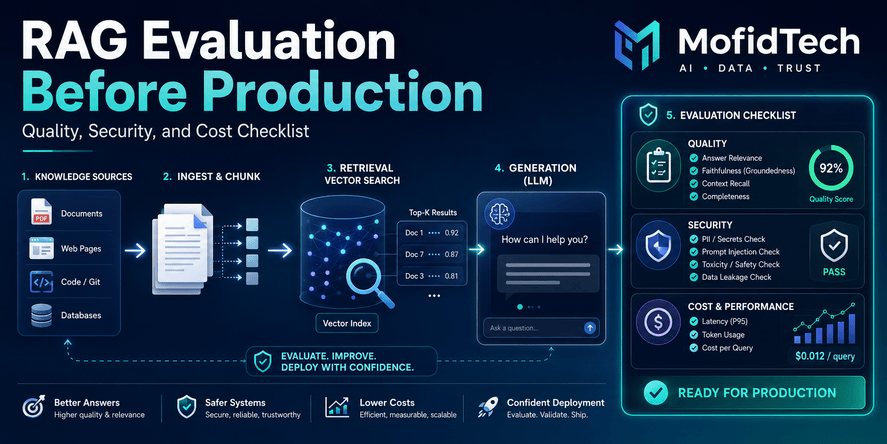





💬 Comments
No comments yet. Be the first to comment!
Login to comment.