Introduction
AI coding tools have changed the speed at which software is designed, generated, reviewed, and maintained. A developer can now ask an assistant to add authentication, parse a document, process images, integrate a cloud service, or upgrade a framework, and the tool may respond with a complete implementation plan that includes new third-party dependencies. Autonomous coding agents go further: they can select packages, update dependency files, run builds, troubleshoot failures, and propose or even execute changes with limited human involvement.
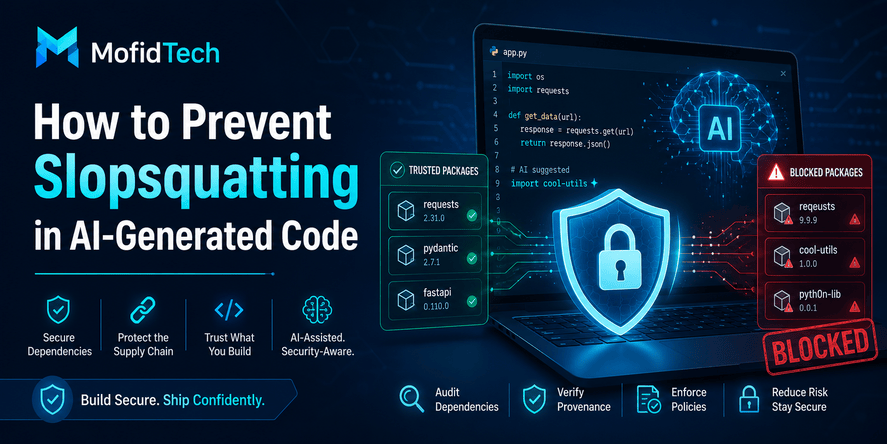
That productivity creates a new trust problem. A language model can recommend a package that sounds legitimate but does not exist, refer to an incorrect package name, propose a release that is not real, or choose a package whose trust signals are weak. When an attacker registers a repeatedly hallucinated package name and waits for developers or agents to install it, the result is known as slopsquatting. The attack turns an AI accuracy failure into a software-supply-chain entry point.
The risk is no longer limited to a theoretical edge case. The 2025 USENIX Security study on package hallucinations analyzed hundreds of thousands of generated code samples and found the behavior across all tested models. A 2026 replication on newer frontier models reported lower rates than earlier work, but still found a persistent population of fabricated package names. Meanwhile, OWASP secure-coding guidance for AI explicitly calls out hallucinated dependencies and recommends verification before installation. These developments make dependency trust a core part of safe AI-assisted development rather than an optional review step.
This guide explains slopsquatting from first principles and then builds a practical defense model for individuals, small teams, and larger organizations. It does not rely on code examples or copy-paste commands. Instead, it focuses on the decisions, workflows, architecture, controls, warning signs, and review habits that reduce risk while preserving the productivity benefits of AI coding tools.
Table of Contents
- 1. What Is Slopsquatting?
- 2. Why AI Coding Agents Increase Dependency Risk
- 3. How a Slopsquatting Attack Develops
- 4. Warning Signs of a Risky AI-Suggested Dependency
- 5. A Layered Framework for Preventing Slopsquatting
- 6. A Practical Dependency Review Workflow
- 7. Controls for Solo Developers, Teams, and Enterprises
- 8. Designing Safer AI Coding Agent Architecture
- 9. Comparing Dependency Security Controls
- 10. Real-World Use Cases and Scenarios
- 11. Common Mistakes That Make Slopsquatting Easier
- 12. Related AI Software-Supply-Chain Risks
- 13. Performance and Productivity Considerations
- 14. What to Do If a Suspicious Package Was Already Installed
- 15. Slopsquatting Prevention Checklist
- 16. Frequently Asked Questions
- 17. Conclusion
1. What Is Slopsquatting?
Slopsquatting is an AI-enabled package-confusion attack. It begins when a code-generating AI invents a plausible dependency name that is not associated with the intended legitimate project. An attacker can register that invented name in a public package repository and publish malicious or deceptive software under it. If the model later repeats the same suggestion, a developer or autonomous agent may install the attacker-controlled package because the registry now confirms that the name exists.
1.1 Package Hallucinations Explained
A package hallucination occurs when an AI system produces a dependency reference that conflicts with reality. The model may fabricate a package name, combine the names of two real libraries, slightly alter the spelling of an existing project, infer a package from documentation that never actually published one, or recommend a version that the registry does not contain. Because language models generate likely text rather than perform an authoritative registry lookup by default, a package name can look perfectly reasonable even when it is wrong.
The key security insight is that a fabricated name can be predictable. Research has shown that some hallucinated package names recur across repeated prompts, and newer 2026 research found a smaller set of package names invented by multiple frontier models. A repeated error is more useful to an attacker than a one-time random mistake because the attacker can register the name in advance and wait for future victims.
1.2 How a Hallucinated Name Becomes a Supply-Chain Attack
A harmless hallucination becomes a security problem when three conditions align. First, the AI recommends a package that the developer expects to be legitimate. Second, the attacker controls the package name in the relevant registry. Third, the developer, build system, or AI agent treats successful installation as evidence of legitimacy. The software supply chain then carries the attacker-controlled dependency into development machines, test environments, CI/CD systems, containers, or production builds.
The attack is attractive because it exploits trust rather than a vulnerability in the package manager itself. The registry may behave exactly as designed. The developer may spell the package exactly as the AI suggested. The build may succeed. What failed is the identity-verification step: nobody established that this package is the correct project, from the expected maintainers, for the intended purpose.
1.3 Slopsquatting vs Typosquatting, Dependency Confusion, and Brandjacking
Attack Pattern | Core Mechanism | Primary Trust Weakness |
|---|---|---|
| Slopsquatting | AI invents or misidentifies a package name; attacker registers the name and waits for AI-assisted installation. | Trust in AI-generated dependency recommendations. |
| Typosquatting | Attacker publishes a package with a name similar to a popular package and waits for a human typo. | Human spelling mistakes. |
| Dependency confusion | A public package with the same name as an internal dependency is selected unexpectedly by tooling. | Ambiguous package source or resolver behavior. |
| Brandjacking / imitation | Attacker uses names, descriptions, or branding that imitate a legitimate project. | Recognition and reputation shortcuts. |
| Compromised legitimate package | A real, previously trusted project is hijacked or publishes a malicious release. | Existing trust in a genuine dependency. |
These attack classes overlap in practice. A package recommended by an AI may be both hallucinated and deceptively similar to a real project. A team therefore should not build a defense that detects only one naming pattern. The goal is to verify package identity, provenance, maintainership, policy status, and security posture before the dependency becomes trusted.
2. Why AI Coding Agents Increase Dependency Risk
Traditional coding assistants usually present suggestions for a human to review. Agentic coding systems can make a longer chain of decisions: analyze a task, choose a library, modify project dependencies, retry after errors, search documentation, and continue until the build succeeds. This autonomy is useful, but it also compresses several decisions that previously gave developers natural opportunities to notice something unusual.
2.1 From Recommendation to Execution
The security boundary changes when the AI can move from “you could use this library” to “I added this dependency and completed the task.” A wrong suggestion is no longer merely bad advice. It can become an action that affects the filesystem, package cache, build environment, network, secrets, and downstream artifacts. The more authority the agent has, the more important it is to separate reasoning from execution and to introduce policy checks between the two.
2.2 Newer Models Reduce Errors, but Do Not Remove the Trust Problem
Model quality is improving, and that matters. A 2026 replication of earlier package-hallucination research measured lower overall hallucination rates for the newer frontier-model cohort than the earlier broad model set. That is encouraging, but it does not eliminate the security problem. Even a low error rate can matter when organizations generate large volumes of code, when the same hallucinated names repeat, or when autonomous agents install dependencies without review.
More importantly, “the package exists” is not the same as “the package is trustworthy.” An attacker can register a hallucinated name before the AI recommends it to a victim. Registry existence checks can therefore remove obvious mistakes, but they cannot be the only control. Identity, history, provenance, and policy context remain necessary.
2.3 Dependency Decisions Are High-Leverage Decisions
A new dependency is not just another line in a project manifest. It can introduce transitive packages, post-install behavior, build scripts, update channels, license obligations, network access, native components, and future maintenance work. A dependency may remain in a project for years. For that reason, AI-assisted dependency selection deserves a review standard closer to accepting a new supplier than accepting a formatting suggestion.
3. How a Slopsquatting Attack Develops
Understanding the attack lifecycle helps teams place controls at the right points. A simplified slopsquatting scenario usually develops through the following stages.
- The AI generates or repeats a plausible package name while answering a coding request.
- The name is unregistered, obscure, incorrect, or not the package the developer actually intended.
- An attacker identifies that name as a recurring AI hallucination or attractive target and registers it.
- The attacker makes the package look plausible with metadata, documentation, repository links, or ordinary-looking release information.
- A developer or AI coding agent later receives the same package suggestion and sees that the package now exists.
- The package is installed or added to the project without establishing that its identity and maintainers are legitimate.
- The malicious dependency gains an opportunity to affect a workstation, build environment, application, credentials, or downstream users.
Important distinction A successful registry lookup proves that a package name has been registered. It does not prove that the package is the intended project, that its maintainers are trustworthy, or that the code is safe. Package existence is a starting signal, not a trust decision. |
4. Warning Signs of a Risky AI-Suggested Dependency
No single warning sign proves malicious intent. The goal is to recognize combinations of signals that justify deeper review or rejection. AI-generated dependency suggestions deserve additional scrutiny when they are new to the team, unfamiliar to the ecosystem, or unnecessary for the requested task.
Signal | Why It Matters |
|---|---|
| The package name is unfamiliar | The name may be real, but unfamiliarity means the developer cannot rely on prior knowledge. Verify identity before installation. |
| Very recent package creation | A package created shortly before the recommendation may be legitimate, but it is a useful reason to examine maintainers, source history, and provenance more carefully. |
| Low adoption with no clear niche | Small packages can be excellent, but weak adoption combined with vague purpose or weak project history increases uncertainty. |
| Single maintainer with little visible history | A new maintainer is not inherently unsafe. The issue is the absence of independent signals that connect the package to a credible project. |
| Name resembles a popular project | Similar naming can indicate typosquatting, brand imitation, or an AI-generated blend of familiar names. |
| Registry page and source repository do not align | The package metadata should point to the expected project, organization, documentation, and release history. |
| Version looks implausible | AI systems can invent versions. Confirm that the recommended release exists and belongs to the intended project. |
| Documentation is generic or copied | Polished text alone is not evidence of legitimacy. Attackers can generate convincing documentation quickly. |
| The AI cannot explain why the dependency is needed | A package should solve a specific requirement. If the purpose is vague, the team may not need the dependency at all. |
| The package suddenly replaces a well-known library | Novel replacements can be valid, but unexpected substitution should trigger a deliberate comparison and review. |
5. A Layered Framework for Preventing Slopsquatting
The strongest defense is layered because every individual control has gaps. A registry lookup can be fooled by a pre-registered malicious package. Popularity can be manipulated. Provenance can show where a package was built without proving that its source is benign. Vulnerability scanners detect known problems but may miss new malware. Human review can be rushed. Combining independent signals gives the team a much stronger basis for trust.
5.1 Control 1: Require a Business or Technical Reason for Every New Dependency
The first defense is dependency minimization. Before evaluating whether a package is safe, ask whether it is necessary. AI tools often optimize for task completion and may introduce a library for functionality the project already has. Fewer dependencies reduce attack surface, update work, license complexity, and operational risk. The reviewer should be able to explain what capability the package adds and why an existing approved dependency or platform feature cannot meet the need.
5.2 Control 2: Verify Registry Identity, Not Just Registry Existence
Confirm that the package appears in the expected official registry, but continue beyond the existence check. Compare the project description, maintainers, official documentation, source repository, organization, release history, and ecosystem references. The objective is to establish that the package in the registry is the package the developer intended to use.
OWASP guidance on secure coding with AI recommends verifying AI-suggested packages and reviewing signals such as package age, download activity, and maintainer history. These signals are most useful as part of a broader identity review rather than rigid rules that automatically classify new or niche projects as malicious.
5.3 Control 3: Prefer Packages with Verifiable Provenance and Attestations
Modern registries increasingly expose provenance and attestation information. npm provenance can show where and how a package was built and connect the release to its source commit and build workflow. PyPI supports digital attestations and Trusted Publishing mechanisms that can associate a release with a verified publishing identity. These mechanisms improve supply-chain transparency because they help consumers verify the origin of a release.
Provenance is not a magic trust seal. PyPI’s own documentation emphasizes that an attestation can show where a package came from without proving that the package is trustworthy or free of malicious code. Treat provenance as an important identity and integrity signal that complements, rather than replaces, security review.
5.4 Control 4: Maintain an Approved Dependency Catalog
Organizations that repeatedly use the same frameworks and libraries can maintain an internal catalog of approved dependencies. The catalog can record the canonical package name, ecosystem, expected source repository, owning organization, permitted versions or version policy, license status, security owner, and review date. AI coding agents should prefer this catalog before searching for a new package.
An allowlist changes the default from “anything in the public registry may be used” to “known dependencies are easy; new dependencies require review.” This is especially valuable for autonomous agents, where the cost of pausing for an approval is lower than the cost of silently introducing an untrusted dependency.
5.5 Control 5: Screen for Vulnerabilities, Malware, and Project Health
Dependency review should combine vulnerability intelligence with broader project-health signals. A package may have no known vulnerability and still be risky because it is abandoned, recently transferred, unexpectedly republished, or maintained by an account with a suspicious history. Conversely, a mature package can have a vulnerability that is well understood and quickly patched. The goal is informed risk assessment, not a simplistic pass/fail based on one metric.
OpenSSF Scorecard is an example of a project that evaluates open-source projects through automated security-related checks and can support informed decisions about dependency risk. Teams can combine such project-health signals with their software-composition analysis, malware detection, advisory feeds, and internal policy.
5.6 Control 6: Pin and Reproduce Dependency Decisions
Once a dependency has been approved, builds should not silently drift to a different package or unexpected release. Reproducible dependency resolution, locked versions, integrity verification, and controlled update processes reduce the chance that a previously reviewed decision changes without visibility. The specific mechanism depends on the ecosystem, but the principle is consistent: a deployment should use the dependency set that was reviewed, not whatever happens to be newest at build time.
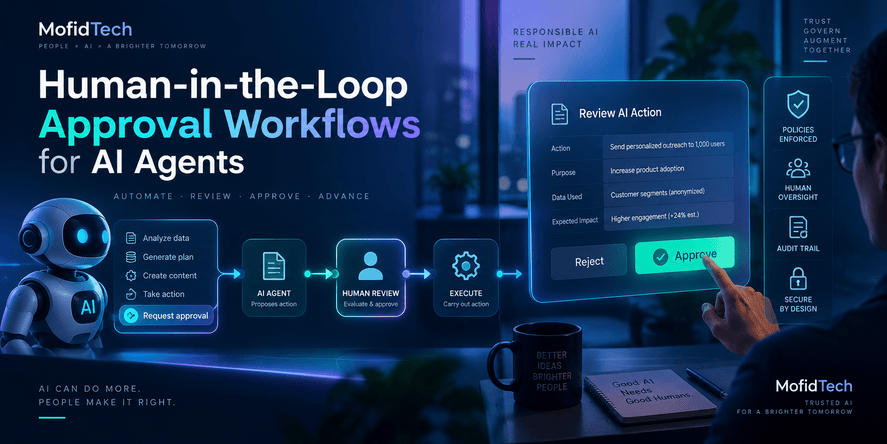
5.7 Control 7: Require Human Approval for New Dependencies Proposed by AI
Human review is most valuable at decision points with long-term security impact. A team does not need to manually approve every edit generated by an AI agent, but introducing a new third-party package is a strong candidate for mandatory approval. The reviewer should see why the dependency is needed, what alternative was considered, where the package comes from, what trust signals were verified, and what transitive or operational impact it creates.
5.8 Control 8: Separate AI Reasoning from Package Installation
A safer architecture lets the AI propose a dependency while a separate trusted component decides whether it may be installed. The decision component can consult an allowlist, package metadata, provenance, security intelligence, licensing policy, and organizational rules. This separation reduces the risk that the same non-deterministic model both chooses the package and grants itself permission to execute the choice.
5.9 Control 9: Restrict Agent Privileges and Network Reach
AI coding agents should operate with the least privilege needed for their task. They should not automatically receive unrestricted access to production credentials, personal home directories, broad network destinations, package publishing rights, or organization-wide secrets. If an untrusted package is installed in a constrained environment, the potential impact is smaller than if the package executes inside a highly privileged developer or CI/CD context.
5.10 Control 10: Keep Auditable Records of Dependency Decisions
A dependency decision should be traceable. Teams benefit from knowing which agent or person proposed the package, which version was selected, what review signals were checked, who approved it, when it was first introduced, and which applications use it. This information improves incident response, makes later updates easier, and supports software-bill-of-materials practices.
6. A Practical Dependency Review Workflow
A good workflow should be strict enough to prevent blind trust but fast enough that developers do not bypass it. The following process can be used when an AI assistant or agent suggests a dependency that is not already approved.
Step | Review Action |
|---|---|
| 1. Confirm the requirement | State the feature or problem the dependency is supposed to solve. Reject dependencies with vague or unnecessary purpose. |
| 2. Confirm the ecosystem and canonical name | Establish the expected package registry and verify that the name corresponds to the intended project. |
| 3. Validate project identity | Check maintainers, source repository, organization, documentation, release history, and project links for consistency. |
| 4. Review provenance and integrity signals | Use available registry provenance, attestations, signatures, or verified publishing information as supporting evidence. |
| 5. Assess project health and security | Review known vulnerabilities, suspicious recent changes, maintenance activity, ownership changes, and automated security signals. |
| 6. Evaluate the proposed version | Confirm the exact version exists, is appropriate for the project, and does not create an avoidable security or compatibility regression. |
| 7. Evaluate transitive impact | Understand significant indirect dependencies, licensing implications, build behavior, and operational footprint. |
| 8. Approve or reject explicitly | Record the decision. New or unusual packages should not enter the codebase through silent agent action. |
| 9. Lock the approved decision | Use ecosystem-appropriate controls so later builds reproduce the reviewed dependency set. |
| 10. Monitor over time | Reassess when ownership, provenance, release behavior, vulnerabilities, or project health materially change. |
6.1 A Simple Decision Framework
For most teams, the decision can be summarized with four questions: Do we need this dependency? Is it the intended package? Do we have enough evidence to trust this release and its maintainers? Can we contain the impact if our judgment is wrong? A “no” or “not sure” answer should trigger deeper review rather than automatic installation.
7. Controls for Solo Developers, Teams, and Enterprises
Not every project needs the same governance. The objective is proportional control: more automation, privilege, users, and business impact justify stronger guardrails.
Environment | Recommended Baseline |
|---|---|
| Solo developer / student | Manual registry check; confirm official source; avoid unnecessary packages; review package history; use security advisories; do not let AI install unfamiliar packages without review. |
| Small product team | Shared approved-dependency list; pull-request approval for new packages; automated vulnerability and project-health checks; controlled dependency updates; auditable ownership. |
| Growing SaaS / professional team | Central dependency policy; software-composition analysis; provenance checks where available; SBOM tracking; restricted agent execution; CI/CD security gates; defined incident process. |
| Enterprise / regulated environment | Curated internal registry or proxy; policy-as-code decision layer; strong identity and provenance requirements; segregation of duties; egress controls; continuous monitoring; formal exceptions and audit trail. |
7.1 The Goal Is Not to Ban AI Coding
Security controls work best when they preserve the reason teams adopted AI tools in the first place. If every AI suggestion requires a long manual process, developers will work around the system. The better approach is to make approved paths fast: known dependencies pass quickly, standard versions are easy to select, provenance and security signals are gathered automatically, and only unusual changes require additional review.
8. Designing Safer AI Coding Agent Architecture
Slopsquatting is easier to prevent when the surrounding architecture assumes that an AI agent can make confident mistakes. The model should be treated as an untrusted decision proposer with useful reasoning capabilities, not as the final authority over package trust.
8.1 Recommended Trust Boundaries
Component | Role |
|---|---|
| AI agent | Analyzes the task and proposes dependencies, versions, or alternatives. It can explain its reasoning but does not decide trust on its own. |
| Dependency policy service | Checks whether the package is already approved, blocked, restricted, or requires review. |
| Registry intelligence layer | Retrieves authoritative package metadata, ownership, provenance, release history, and ecosystem-specific signals. |
| Security analysis layer | Combines vulnerability data, malware detection, project-health signals, license policy, and organizational risk criteria. |
| Human approval gate | Handles new, high-risk, ambiguous, or policy-exception dependencies. |
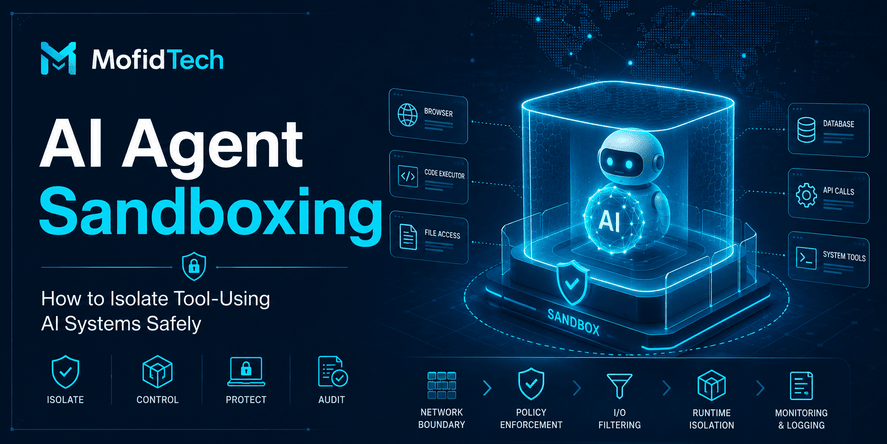
| Sandboxed execution environment | Limits the damage that an incorrect package could cause during evaluation, builds, or tests. |
| Audit and inventory layer | Records decisions and maps approved components to projects and released artifacts. |
8.2 Prefer Authoritative Retrieval Over Model Memory
When an agent needs current package information, the architecture should rely on live, authoritative metadata rather than the model’s training memory. Package registries change constantly. New versions appear, projects are yanked, maintainers change, vulnerabilities are disclosed, and packages can be transferred or compromised. Grounding the decision in current registry and security intelligence reduces factual errors and gives reviewers evidence they can inspect.
8.3 Make High-Risk Actions Explicit
An agent should clearly distinguish between suggesting a package, modifying a dependency manifest, installing a package, executing package lifecycle behavior, publishing a package, and deploying an artifact. These actions have different risk levels. Treating them as separate permissions allows an organization to automate low-risk work while keeping stronger controls around operations that can affect credentials, systems, or users.
9. Comparing Dependency Security Controls
Control | What It Addresses | Strength | Limitation |
|---|---|---|---|
| Registry existence check | Filters obvious hallucinations | Fast and simple | Fails if attacker already registered the hallucinated name |
| Manual maintainer/project review | Identity and legitimacy assessment | Strong contextual judgment | Time-consuming and inconsistent if undocumented |
| Approved dependency catalog | Prevents arbitrary package selection | Fast for common work; easy for agents to follow | Requires maintenance and exception handling |
| Provenance / attestations | Origin and publishing integrity | Stronger traceability to source and build identity | Does not prove the source itself is benign |
| Vulnerability scanning | Known security flaws | Automatable and widely understood | Does not necessarily detect new malware or identity deception |
| Project-health scoring | Maintenance and security-practice signals | Useful for comparative risk assessment | Heuristics can penalize small legitimate projects or miss targeted abuse |
| SBOM and inventory | Visibility into deployed dependencies | Critical for response and impact analysis | Does not prevent a bad dependency by itself |
| Sandboxing / least privilege | Limits blast radius | Reduces consequence of mistakes | Containment is not equivalent to trust verification |
10. Real-World Use Cases and Scenarios
10.1 AI-Assisted Python Web Development
A developer asks an AI assistant to add a specialized integration to a web application. The assistant recommends a package the developer has never seen. The safest workflow is not to begin by installing it. The developer first confirms whether the package is the canonical project for that integration, checks its source and maintainer history, verifies current release information, reviews security signals, and compares it with established alternatives. If the package is unnecessary or weakly supported, the team chooses a known dependency or implements the feature through an existing platform capability.
10.2 Frontend Development with a Fast-Moving Package Ecosystem
Frontend ecosystems can contain many small packages with similar names. An AI may recommend a package that appears to fill a narrow utility need. Because the package is small, reviewers may be tempted to treat it as low risk. The opposite can be true: a tiny dependency can still execute during development or builds and can bring many transitive dependencies. The review should focus on whether the package is necessary, how widely and transparently it is maintained, and whether the team can avoid adding another third-party component for a trivial capability.
10.3 Autonomous Agent Performing Dependency Upgrades
An AI agent is assigned to keep dependencies current. This is a high-value automation opportunity, but “latest” is not automatically “safest.” A robust workflow verifies that proposed versions exist, evaluates security advisories and breaking changes, checks whether the package identity or ownership changed, and produces a reviewable change with evidence. The agent can automate analysis and testing while a policy layer prevents unexpected packages or versions from being adopted silently.
10.4 Projects with Internal and Public Packages
Organizations that use internal package names face an additional naming risk. If internal and public namespaces can be confused, an AI tool may recommend or resolve the wrong source. Teams should make package-source expectations explicit, use controlled registries or proxies where appropriate, and ensure that internal names cannot silently fall back to untrusted public packages. This protects against both traditional dependency confusion and AI-assisted misidentification.
11. Common Mistakes That Make Slopsquatting Easier
Common Mistake | Better Practice |
|---|---|
| Mistake 1: Trusting the AI because the answer sounds confident | Language quality is not evidence of package authenticity. Treat package identity as an external fact that must be verified. |
| Mistake 2: Stopping after confirming that the package exists | A malicious actor can register a hallucinated name. Continue with maintainer, source, provenance, and security checks. |
| Mistake 3: Using download count as the only trust metric | Popularity is useful context but can be manipulated, inherited, or irrelevant for niche projects. Combine independent signals. |
| Mistake 4: Letting agents install any public dependency | Public availability should not equal organizational approval. Apply policy before installation. |
| Mistake 5: Automatically accepting “latest version” suggestions | Newer releases can be incompatible, compromised, yanked, or simply not the correct choice for the project. |
| Mistake 6: Ignoring transitive dependencies | A small direct dependency can pull in a large and risky dependency tree. |
| Mistake 7: Giving the coding agent production-level credentials | A malicious package installed during development or testing can have a much larger impact when the execution environment contains powerful secrets. |
| Mistake 8: Failing to record why a dependency was approved | Without an audit trail, later reviewers cannot tell whether the package was deliberately trusted or simply appeared through AI-generated changes. |
| Mistake 9: Treating provenance as proof of harmlessness | Provenance helps verify origin and integrity. It does not prove that the source or maintainer is trustworthy. |
| Mistake 10: Believing model improvements eliminate the problem | Lower hallucination rates reduce frequency, but large-scale or autonomous use still requires independent trust controls. |
12. Related AI Software-Supply-Chain Risks
Slopsquatting should be addressed as part of a broader AI coding security program. The same trust model that prevents hallucinated dependency attacks also helps with several adjacent risks.
12.1 Hallucinated Versions and Incorrect Upgrade Advice
An AI may identify the correct package but invent a release number or recommend a version that is inappropriate for the project. This can create availability problems, encourage unsafe workarounds, or cause the agent to search for unofficial sources. Version verification should therefore be as explicit as package-name verification.
12.2 Malicious or Compromised Legitimate Packages
A package can be real, popular, and previously trusted while a new release becomes malicious or compromised. Provenance, change monitoring, controlled updates, security scanning, and dependency inventory help teams detect unexpected shifts. Slopsquatting controls should not create the false impression that known package names are automatically safe forever.
12.3 Prompt Injection Through Repositories and Documentation
AI coding agents can read issue descriptions, documentation, repository files, and external pages as part of their workflow. Untrusted content can attempt to influence the agent’s behavior, including its choice of tools or dependencies. The agent should treat external content as data, not as authority, and high-risk actions should remain behind policy and approval boundaries.
12.4 Tool and MCP Ecosystem Risk
Agents increasingly connect to external tools and services through standardized interfaces and plugin-like ecosystems. A dependency review mindset applies here as well: verify the identity, permissions, maintenance, data access, and trust boundaries of every external capability. A safe coding agent should not gain broad tool access simply because a model can call the tool.
12.5 Secret Exposure During Automated Development
A malicious dependency becomes more dangerous when the execution environment contains cloud credentials, package-publishing tokens, database passwords, SSH keys, or production secrets. Least privilege, short-lived credentials, secret isolation, and environment separation are therefore important supporting controls for slopsquatting defense.
13. Performance and Productivity Considerations
Security review adds friction, but poorly designed controls add much more friction than necessary. The objective is to move verification earlier and automate evidence gathering so that developers spend their time on judgment rather than repetitive lookup work.
13.1 Fast Paths for Known Dependencies
If a package is already approved, widely used inside the organization, and within an accepted version policy, an AI agent can proceed with minimal interruption. This keeps normal work fast and reserves human attention for changes that expand the trust boundary.
13.2 Slow Paths for Novel or High-Risk Dependencies
A package with weak identity signals, recent creation, unusual ownership, missing provenance, broad privileges, or a critical runtime role deserves deeper review. Teams should embrace this asymmetry. The goal is not uniform friction; it is risk-based friction.
13.3 Measure Dependency Churn Caused by AI
Organizations can track how often AI-generated changes introduce new dependencies, replace existing packages, or perform version upgrades. High churn may indicate that agents are solving tasks by adding libraries rather than reusing approved capabilities. Reducing unnecessary churn improves security, build performance, maintenance, and architecture consistency.
14. What to Do If a Suspicious Package Was Already Installed
If a team discovers that an unfamiliar or suspicious AI-suggested package has already been installed, the response should be calm, evidence-driven, and proportional to the environment’s sensitivity. The package may be benign, but it should be treated as untrusted until verified.
1. Stop further adoption of the package and prevent new builds or projects from adding it until review is complete.
2. Identify where the package was installed or included, including developer machines, CI/CD jobs, containers, deployed services, and downstream artifacts.
3. Preserve relevant logs and build information so the team can understand what happened and avoid destroying useful evidence during cleanup.
4. Verify the package’s canonical identity, maintainers, source repository, release history, provenance, and known security reports.
5. Assess what permissions, files, credentials, network access, or build privileges were available to the package in each affected environment.
6. Remove or replace the package through the organization’s normal incident and dependency-management process if trust cannot be established.
7. Rotate or invalidate credentials when there is a reasonable possibility that sensitive tokens or secrets were exposed, following the organization’s incident-response procedures.
8. Review monitoring and endpoint or cloud logs for unexpected behavior associated with the affected timeframe.
9. Notify package registries or security teams when evidence supports malicious behavior, and coordinate disclosure through appropriate channels.
10. Update the AI dependency policy so the same trust gap cannot recur.
Do not confuse removal with response completion Deleting a package from a project does not establish whether it executed, accessed secrets, changed artifacts, or propagated through a build pipeline. Incident response should focus on exposure and impact, not only on the dependency file. |
15. Slopsquatting Prevention Checklist
- ☐ Every new dependency has a clear technical reason.
- ☐ AI-suggested packages are verified against the authoritative registry.
- ☐ The canonical project identity, source repository, and maintainers are checked.
- ☐ The exact recommended version is confirmed to exist and is assessed for security and compatibility.
- ☐ Package age, release history, ownership changes, and maintenance activity are reviewed when relevant.
- ☐ Provenance or attestations are checked where the ecosystem provides them.
- ☐ Known vulnerabilities and broader project-health signals are reviewed.
- ☐ New dependencies require human approval unless explicitly pre-approved by policy.
- ☐ AI agents cannot silently install arbitrary packages from public registries.
- ☐ Approved dependencies and versions are made reproducible through ecosystem-appropriate locking and integrity controls.
- ☐ Transitive dependencies and licensing impact are considered.
- ☐ Agents run with least privilege and limited secret exposure.
- ☐ Build and dependency decisions are logged and auditable.
- ☐ Software inventory or SBOM practices make affected projects discoverable later.
- ☐ The team has a defined response process for suspicious dependencies.
16. Frequently Asked Questions
What is slopsquatting?
Slopsquatting is a package-confusion attack that exploits AI-generated package hallucinations. An AI suggests a plausible but incorrect package name, an attacker registers that name, and a later user or agent may install the attacker-controlled package.
Why is slopsquatting different from typosquatting?
Typosquatting primarily depends on a human mistyping a legitimate package name. Slopsquatting depends on an AI generating or repeating a package name that was not the intended legitimate project. Both attacks exploit naming and trust, but the source of the misleading name is different.
Can an AI hallucinate a dependency even if the rest of its code is correct?
Yes. A generated solution can be logically sound while one dependency name or version is incorrect. Package identity should therefore be verified independently from code-quality review.
Is checking that a package exists enough?
No. An attacker can register a hallucinated package name before a victim searches for it. Existence confirms registration, not legitimacy. Review maintainers, source links, release history, provenance, security signals, and organizational approval status.
Do provenance attestations prove that a package is safe?
No. Provenance can strengthen confidence about where and how a package was built or published. It does not guarantee that the source code, maintainer, or intended behavior is trustworthy. Provenance is one layer in a broader verification process.
Should AI coding agents be allowed to install dependencies automatically?
Only within a controlled policy. Agents can safely automate known, approved dependencies, but unfamiliar or high-risk packages should trigger verification and, in many organizations, human approval. Agent execution should also be sandboxed and least-privileged.
How can a small team prevent slopsquatting without expensive tools?
Start with dependency minimization, manual verification of unfamiliar packages, a shared approved-dependency list, pull-request review for new packages, basic vulnerability checking, controlled updates, and least-privilege development environments. More automation can be added as the team grows.
Are newer AI models still vulnerable to package hallucinations?
Research in 2026 suggests newer frontier models reduced the frequency compared with earlier broad model cohorts, but the behavior has not disappeared. Persistent and repeated hallucinations still justify independent verification, especially at scale or with autonomous agents.
What should I verify before approving an AI-suggested package?
Confirm why the package is needed, its canonical registry identity, maintainers, source repository, exact version, release history, provenance where available, known vulnerabilities, project-health signals, transitive impact, and whether the package fits organizational policy.
What should a company do if a suspicious package is already in production?
Treat it as an incident-triage problem. Identify affected systems, preserve evidence, verify package identity and behavior, assess exposed permissions and credentials, remove or replace the dependency when appropriate, review logs, rotate credentials when exposure is plausible, and improve dependency controls.
17. Conclusion
Slopsquatting demonstrates a broader lesson about AI-assisted software development: fluent output is not the same as verified reality. A coding model can generate a package name that looks correct, an autonomous agent can act on that suggestion, and a public registry can successfully return a package—yet the resulting dependency can still be the wrong software from the wrong maintainer.
The most effective defense is not to reject AI coding or to rely on a single detector. It is to design a layered trust process around dependency decisions. Minimize unnecessary packages, verify canonical identity, use provenance and security intelligence as supporting evidence, maintain approved dependency paths, require review for new trust relationships, restrict agent privileges, preserve reproducibility, and keep an inventory that supports rapid response.
As AI coding agents become more capable, this architecture becomes more important, not less. Better models can reduce hallucinations, but they cannot turn a public package registry into a trusted source by themselves. MofidTech readers who learn to separate AI reasoning from dependency trust will be better prepared to use AI development tools quickly without allowing convenience to become a software-supply-chain weakness.
💬 Comments
No comments yet. Be the first to comment!
Login to comment.